Chronological Bible Reading Schedule (Free PDF 2026)
TL;DR
Read the Bible in chronological order with our free schedule. See Scripture unfold historically from Genesis through Revelation.
Chronological Bible Reading Schedule: Read Scripture in Time Order
Have you ever wanted to read the Bible as events really happened? A chronological bible reading schedule lets you do just that. You follow the flow of history, not the usual book order. It's a fresh way to see God's story unfold.

Maybe you've read the Bible before. Or maybe you want a new view. Reading in time order shows links you've never seen. You'll learn when the prophets spoke. You'll see why David wrote certain Psalms. And you'll watch God's promise of rescue unfold step by step.
Why Read the Bible This Way?
Reading in time order isn't the "right" way—it's just a fresh way. Here's why many readers love it:
You see the big picture. Read Job near early Genesis. Read the Prophets with Kings. Suddenly, the parts connect. The story makes more sense.
You get the history. The prophets spoke to real people in real times. A chronological bible reading plan puts their words right where they belong.
You see it with new eyes. If you've read the Bible the normal way, this gives you a whole new view. It's like seeing a movie in a new order.
What Makes It Different?
Your Bible is sorted by type: Law, History, Poetry, Prophets, Gospels, Letters. That's how most of us read it. But how to read the bible in chronological order means mixing things up. You read parts based on when they happened.
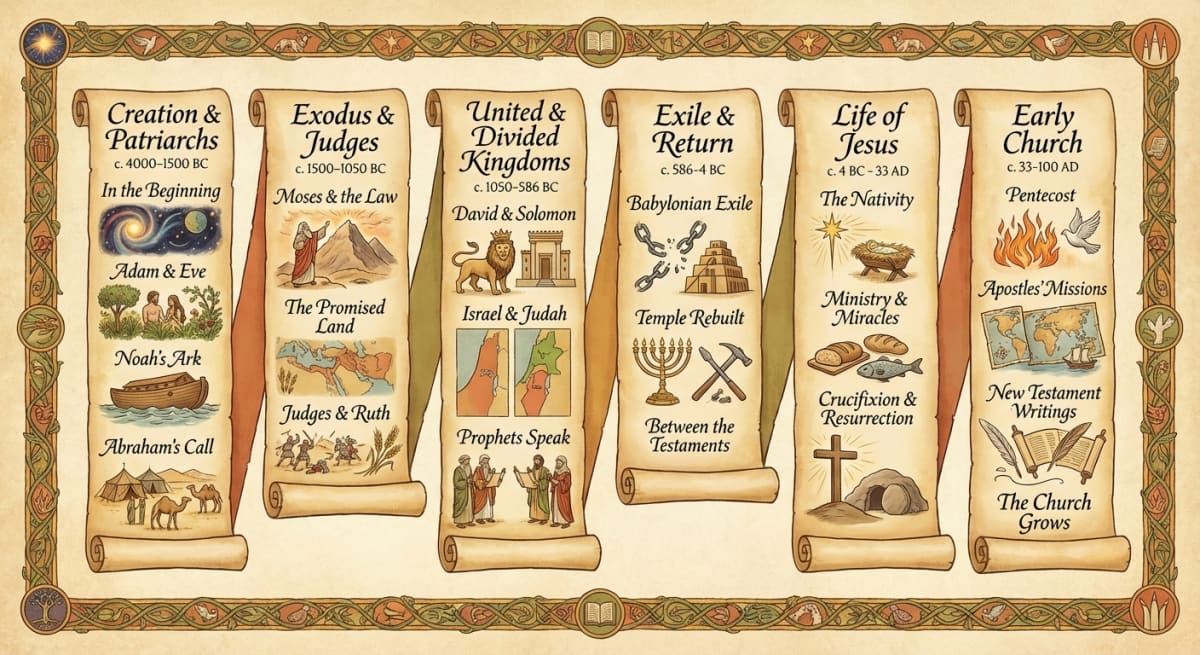
Here's how it compares:
| Normal Order | Time Order |
|---|---|
| Genesis to Deuteronomy first | Job near Genesis |
| All Psalms together | Psalms spread through history |
| Prophets at end of Old Testament | Prophets mixed with Kings |
| Gospels, then Acts | Gospels may blend together |
The biggest surprise? Job often comes very early. Many think he lived near Abraham's time. And those Psalms? They're split up. You read them when David wrote them, right in his story.
Where Do the Books Fit?
Here's a simple bible reading order timeline. It shows how the Bible fits into history.
Creation to the Patriarchs
Genesis 1-50 and Job. The world begins. Sin enters. The flood comes. Then Abraham, Isaac, Jacob, and Joseph lead us to Egypt.
Exodus and Law
Exodus, Leviticus, Numbers, Deuteronomy. Moses leads Israel out. God gives the Law. They wander 40 years.
Entering the Land
Joshua, Judges, Ruth. Israel enters the Promised Land. They cycle through faith and rebellion.
The United Kingdom
1-2 Samuel, 1 Chronicles, Psalms, Proverbs, Ecclesiastes, Song of Solomon. Saul, David, and Solomon rule. David writes many Psalms. Solomon shares his wisdom.
The Split Kingdom
1-2 Kings, 2 Chronicles, and many Prophets. The kingdom breaks in two. Isaiah, Jeremiah, Hosea, and others speak to both nations. This is where a bible timeline reading plan shines. You read the prophets with the events they talked about.
Exile and Return
Ezekiel, Daniel, Ezra, Nehemiah, Esther, Haggai, Zechariah, Malachi. Babylon takes Judah. The people return and rebuild. The Old Testament ends with hope.
Jesus and the Church
Matthew, Mark, Luke, John, Acts, Letters, Revelation. Jesus comes. The church is born. Letters go to early believers. Revelation closes the story.
A Simple 52-Week Schedule
Here's a chronological order bible plan you can follow. It splits the Bible into one year:
Weeks 1-4: Creation to Joseph
Genesis 1-50, Job 1-42
Weeks 5-8: Exodus and Law
Exodus, Leviticus, Numbers, Deuteronomy
Weeks 9-11: The Promised Land
Joshua, Judges, Ruth
Weeks 12-17: The Kingdom Rises
1-2 Samuel, 1 Chronicles, plus David's Psalms
Weeks 18-22: Solomon's Reign
1 Kings 1-11, 2 Chronicles 1-9, Proverbs, Ecclesiastes, Song of Solomon
Weeks 23-35: The Split Kingdom
1 Kings 12-22, 2 Kings, 2 Chronicles 10-36, Isaiah, Jeremiah, and more Prophets
Weeks 36-40: Exile and Return
Ezekiel, Daniel, Ezra, Nehemiah, Esther, Haggai, Zechariah, Malachi
Weeks 41-45: The Gospels
Matthew, Mark, Luke, John
Weeks 46-52: The Early Church
Acts, Romans through Revelation
Want daily readings? Check our bible reading schedule for more detail.

Why Readers Love This Method
Reading in time order has real benefits:
The story flows better. You don't jump around. You follow one story from start to end. This keeps you going day after day.
History clicks into place. Why did God send prophets then? What was the world like when Jesus came? Time-order reading answers these questions.
The prophets make sense. Read Amos after learning about Israel's wealth under Jeroboam II. His warnings hit harder. Context changes everything.
David's Psalms feel real. Read Psalm 51 right after David's sin in 2 Samuel 11-12. You feel what he felt. It's powerful.
You see God's faithfulness. Watch history unfold. See how God kept every promise. The thread of hope becomes clear.
It's great for going deeper. Already read the Bible in normal order? This gives fresh insights from the same pages.
Things to Know First
This method has some bumps. Here's what to expect:
Some books get split up. Psalms, for example, get spread across history. If you love reading them all together, this may feel odd at first.
Scholars don't all agree. When was Job written? How should we order the Prophets? Plans differ slightly based on these debates.
It takes more focus. You're not just reading. You're placing events in history. This is rewarding but needs more mental energy.
Daily portions vary. Some days have more to read than others. It depends on how much happened in that time period.
You need to stay with it. With normal reading, you can stop and start easily. With time-order reading, keeping up helps you follow the story.
Is This Right for You?
Try this approach if you:
- Have read the Bible in normal order before
- Love history and want more context
- Feel lost when you read the Prophets
- Want a fresh view of familiar verses
You might prefer normal order if you:
- Are brand new to Bible reading
- Like the same amount to read each day
- Want to read whole books at a time
Both ways are great. It's about what helps you connect with Scripture best.
Many readers switch each year. One year time order. The next year normal. This keeps things fresh and shows new sides of God's Word.
Track Your Progress with BibleMate
No matter how you read, tracking helps. BibleMate offers free progress tracking. No account needed. No ads. Just a simple way to mark your reading and watch your journey grow.
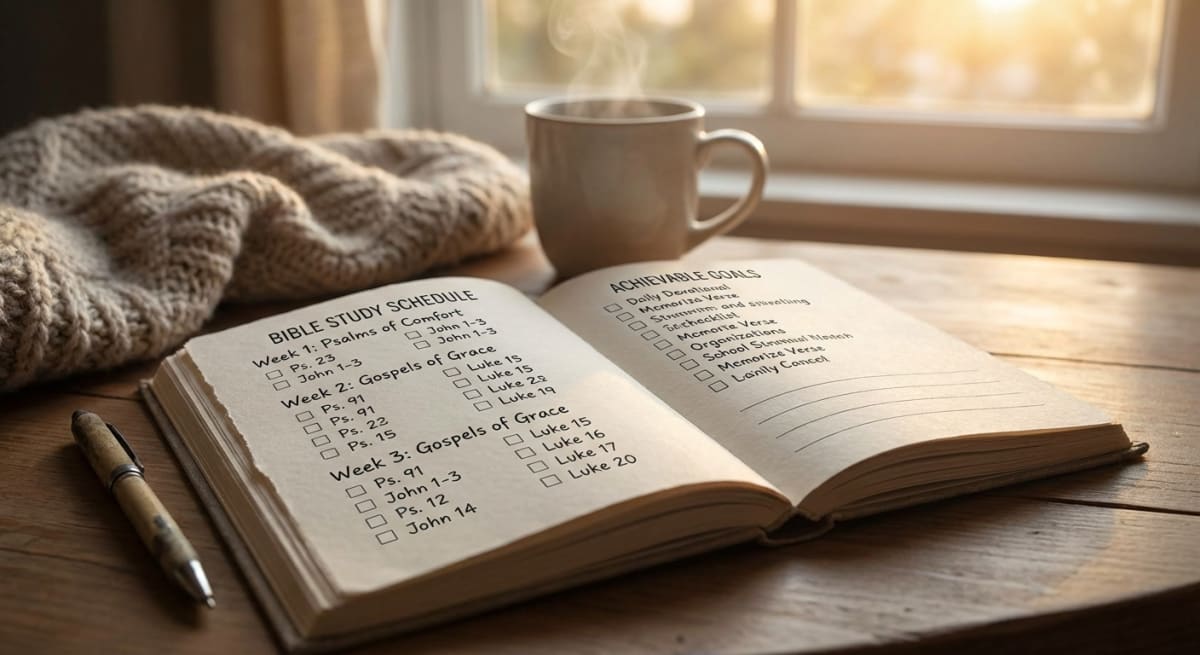
You can explore other reading plan options too. Find what fits your life right now. The key isn't how you read—it's that you keep showing up.
Frequently Asked Questions
How long does it take to read the Bible this way?
Most plans take one year. Daily readings run 15-20 minutes. But you can slow down if you want. Some readers take 18 months or two years. There's no rush. This is about growing, not racing.
Is time order the "right" way to read?
No! The normal order has great value. Christians have read it that way for ages. Time order is just a different lens. Both ways honor God's Word.
What's the difference between time order and normal order?
Normal order groups books by type: Law, History, Poetry, Prophecy, Gospels, Letters. Time order puts passages in the order events happened. Job may come early. Psalms get spread through David's life.
Can new readers use this plan?
It works best for those who know the basics. New readers might want to try a standard plan first. Then try time order on your second trip through.
Why does Job come so early in some plans?
Many scholars think Job lived around Abraham's time. They base this on his long life and the fact that the Law isn't mentioned. Placing Job early reflects that view.
Do I need a special Bible?
No! Any Bible works. Just follow a time-order guide. Some Bibles do come with pages already in time order. But a normal Bible with a reading plan works just as well.
Ready to start your journey through Scripture in time order? Begin today with BibleMate's free plan. Track your progress, stay on track, and see God's Word in a whole new way. You've got this!
Related on BibleMate
Keep exploring related topics, plans, and lists.
Reading Plans
Bible Books
Get the BibleMate App
Take your Bible reading anywhere. Track progress, build streaks, and stay on plan — all from your phone.
Ready to start your Bible reading journey?
Read the entire Bible in one year with daily guidance.