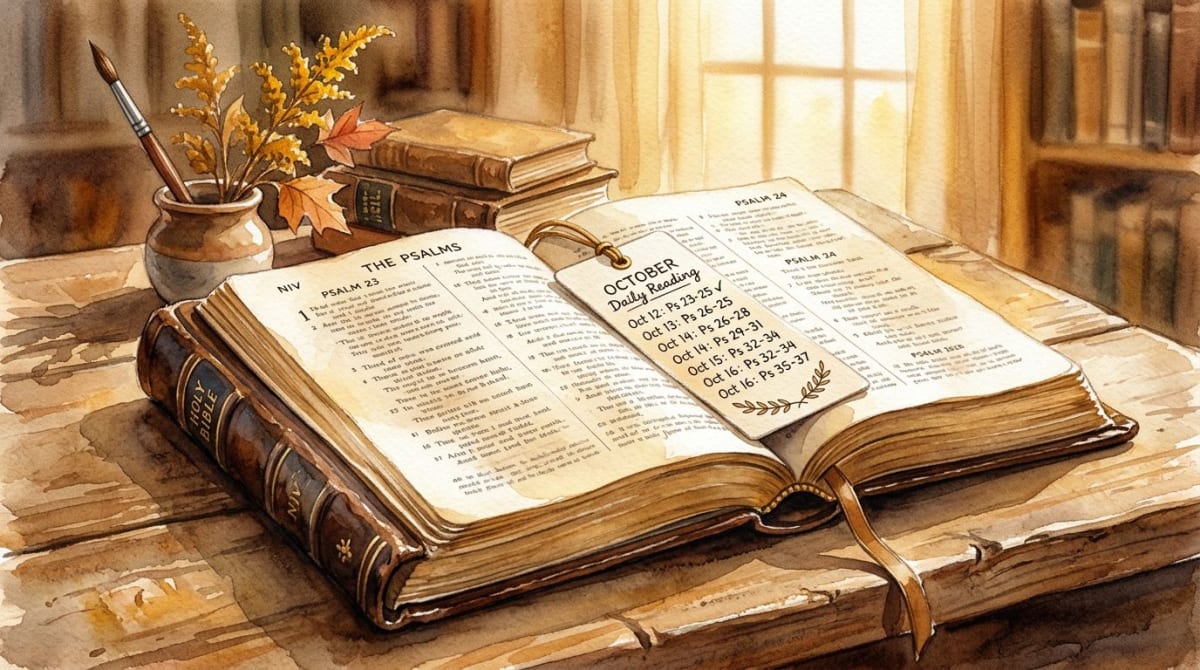
5 Day Bible Reading Plan: Realistic Schedule (2026)
TL;DR
A 5-day Bible reading plan for busy people. Realistic schedule that fits your life. Free printable included.
5 Day Bible Reading Plan: A Realistic Schedule for Busy Lives
Let's be honest—life gets busy. Between work, family, and everything else on your plate, finding time to read the Bible every single day can feel overwhelming. That's where a 5 day Bible reading plan comes in. It's a realistic approach that builds in flexibility while still helping you grow in God's Word.
If you've ever started a daily reading plan only to fall behind and give up, you're not alone. Many people find that a Monday-through-Friday schedule works better for their actual lives. And that's completely okay.

Why a 5 Day Bible Reading Plan Works Better for Most People
There's nothing wrong with a daily Bible reading schedule. But here's the reality: life doesn't always cooperate with our best intentions. Kids get sick. Deadlines pile up. Sometimes you're just exhausted.
A 5-day approach builds grace right into the system. Here's why it works:
Built-in buffer days. When you read Monday through Friday, weekends become catch-up days rather than "I've already failed" days. Miss Tuesday? No problem—Saturday is there for you.
Aligned with your routine. Most people have more consistent schedules during the workweek. Building Bible reading into your existing morning or lunch routine is easier than trying to maintain consistency through unpredictable weekends.
Less guilt, more joy. When you're not constantly falling behind, reading becomes something you look forward to instead of a task you dread.
Sustainable long-term. A plan you actually stick with beats a "perfect" plan you abandon after two weeks.
How to Structure Your 5 Day Bible Reading Plan
The key to success is matching your reading schedule to your natural rhythms. Here's a proven framework:
Morning Readers (Most Common)
- Wake up 15-20 minutes earlier than usual
- Read with your coffee or breakfast
- Set your Bible out the night before as a visual reminder
Lunch Break Readers
- Use 15-20 minutes of your lunch hour
- Keep a Bible app on your phone for easy access
- Find a quiet spot—your car works great
Evening Readers
- Read right after dinner, before screens take over
- Keep sessions shorter (10-15 minutes) since you're tired
- Consider audio Bibles if your eyes are strained
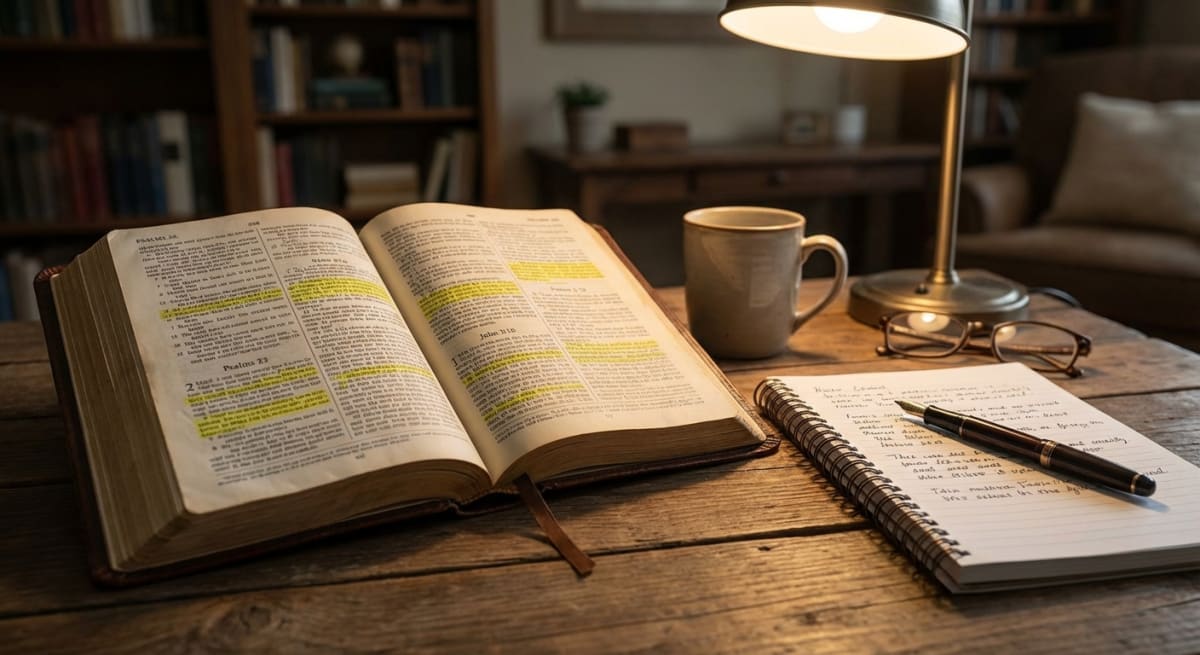
Three Different 5 Day Approaches to Try
Not all reading plans are created equal. Here are three approaches that work well on a 5-day schedule:
1. The Balanced Method
This is what we use at BibleMate. Each day includes:
- Old Testament: The main narrative and history
- New Testament: Gospels and epistles
- Wisdom Literature: Psalms and Proverbs
This keeps variety in your reading and helps you see connections across Scripture. You won't get stuck in Leviticus for weeks. Plus, starting each day with a Psalm gives you something to meditate on throughout the day.
The balanced method works especially well for people who like routine but need variety. You always know what types of reading to expect, but the content changes constantly.
2. The Gospel-First Method
Perfect for beginners or anyone returning to Scripture:
- Week 1-4: Gospel of Mark (shortest Gospel)
- Week 5-8: Gospel of John
- Week 9-12: Acts
- Week 13+: Expand to Paul's letters
Start where Jesus' story unfolds most clearly, then branch out. Mark moves fast—it's action-packed and gets to the point. John goes deeper into theology and Jesus' conversations.
This approach is great if the Old Testament feels intimidating. Get grounded in Jesus first. Everything else in Scripture points to Him anyway. Once you've built confidence with the Gospels, the rest of the Bible opens up naturally.
3. The Chronological Method
Read events in the order they happened:
- Monday: Historical narrative
- Tuesday: Historical narrative (continued)
- Wednesday: Prophets from that era
- Thursday: Psalms from that period
- Friday: Related New Testament connections
This approach helps you understand the story of the Bible as one connected narrative. When you read a prophet's warning, you'll understand the historical situation they were addressing. When David writes a psalm, you'll know what battle he just fought.
Many people say the chronological method finally made the Bible "click" for them. Check out our guide to the chronological Bible reading plan if this interests you.
Sample Week: What a 5 Day Bible Reading Plan Actually Looks Like
Here's a concrete example using the Balanced Method to read through the Bible in a year:
| Day | Old Testament | New Testament | Wisdom |
|---|---|---|---|
| Monday | Genesis 1-3 | Matthew 1 | Psalm 1 |
| Tuesday | Genesis 4-6 | Matthew 2 | Psalm 2 |
| Wednesday | Genesis 7-9 | Matthew 3 | Psalm 3 |
| Thursday | Genesis 10-12 | Matthew 4 | Proverbs 1:1-9 |
| Friday | Genesis 13-15 | Matthew 5:1-26 | Proverbs 1:10-19 |
Total daily reading time: 15-20 minutes at an average pace.
This keeps portions manageable while ensuring steady progress. In one year, you'll read through the entire Bible—even with weekends off.
What to Do on Weekends
Your weekends aren't wasted in a 5-day plan. Here are meaningful ways to use them:
Catch up. Life happened and you missed Wednesday? Saturday morning is perfect for catching up without stress. Make a cup of coffee, find a quiet corner, and read at a relaxed pace.
Go deeper. Pick one passage from the week that stood out. Read it again. Journal about it. Memorize a verse. Look up cross-references and see how that theme appears elsewhere in Scripture.
Rest. Sabbath isn't just an Old Testament concept. Sometimes the most spiritual thing you can do is rest. Let the week's reading settle into your heart without adding more.
Listen. Try an audio Bible or podcast like The Bible in a Year if you want passive engagement. Listen while doing chores, walking, or driving.
Discuss. Talk with your family or a friend about what you read that week. Teaching others helps cement your own understanding. Even a 10-minute conversation deepens your retention.
Study one topic. Did a word or concept keep appearing in your readings? Spend Saturday doing a mini word study. Search for that word in other passages and see what patterns emerge.
Pray through Scripture. Take a Psalm or passage from the week and turn it into a prayer. Read a line, then respond to God in your own words. This practice—called lectio divina—transforms reading into conversation.

Tips for Actually Sticking With Your Plan
Starting is easy. Sticking with it takes intentionality. Here's what works:
1. Same Time, Same Place
Habit research shows that consistency in location and timing dramatically increases follow-through. Pick your spot. Guard your time. Your brain will start associating that chair or that corner with Bible reading—making it easier to start each day.
2. Start Small
If 15-20 minutes feels like too much, start with 5. Reading one chapter is infinitely better than reading none. You can always add more later. Many long-term Bible readers started with just a single Psalm per day.
3. Track Your Progress
There's real motivation in seeing checkmarks add up. Use an app, a journal, or our free Bible reading plan tracker at BibleMate. Seeing your streak grow creates positive momentum that carries you through low-motivation days.
4. Plan for Failure
You will miss days. It's not a question of if, but when. The difference between people who succeed and those who quit is what happens after they miss a day. Plan your comeback before you need it. Tell yourself now: "If I miss a day, I'll simply read the next morning without guilt."
5. Find an Accountability Partner
Text a friend what you read each day. Join a Bible reading group at church. The social element helps more than you might expect. Even just knowing someone might ask about your reading increases follow-through dramatically.
6. Remove Friction
Put your Bible where you'll see it. Bookmark your reading app on your phone's home screen. Charge your device next to your reading spot. The easier you make starting, the more likely you'll actually do it.
Common Mistakes to Avoid
Even with the best intentions, certain patterns derail Bible reading plans. Watch out for these:
Trying to Understand Everything
You don't need to master every verse before moving on. Some passages won't make sense until you've read more of the Bible's big story. Mark confusing sections, keep reading, and trust that understanding grows over time.
Making It Too Complicated
Bible reading doesn't require five commentaries, a Greek dictionary, and a two-hour time block. Simple and consistent beats complex and sporadic every time. Save deep study for weekends or special seasons.
Comparing Yourself to Others
Someone in your small group reads for an hour every morning. Good for them. That's not your life, and that's okay. God meets you where you are, not where someone else is.
Quitting After Missing a Week
This is the biggest mistake of all. Life gets crazy—vacations, illness, busy seasons. Missing a week doesn't erase your progress. Missing a week and then quitting does. Just start again. No judgment, no starting over from Genesis. Pick up where you left off.
How BibleMate Can Help
We built BibleMate specifically for people who want a simple, no-pressure way to read through the Bible. Here's what makes it different:
- No account required. Just start reading. Your progress saves automatically in your browser.
- Flexible tracking. Miss a day? Catch up when you can. No guilt, no notifications nagging you.
- Multiple translations. Switch between ESV, NIV, KJV, and NLT based on your preference.
- Completely free. No ads, no premium tiers, no hidden costs. Ever.
If you're looking for something more structured, check out our one year Bible plan that breaks down the entire Bible into daily portions.
Remember: Progress Over Perfection
Here's the most important thing to remember: any Bible reading is better than no Bible reading.
A 5-day plan isn't about doing less—it's about doing what's sustainable. It's about building a habit that lasts years, not weeks.
If you miss a day, that's okay. If you miss a week, that's okay too. Just pick up where you left off. God's Word isn't going anywhere, and neither is His grace.
The goal isn't perfection. The goal is transformation—slow, steady, one chapter at a time.
Frequently Asked Questions
Can I really read the whole Bible in a year with only 5 days per week?
Yes! With slightly longer daily readings (about 15-20 minutes), you can complete the entire Bible in 52 weeks reading just Monday through Friday. The key is consistency—a 5-day plan you actually follow beats a 7-day plan you abandon.
What if I fall behind on my 5 day Bible reading plan?
Don't stress about it. Use your weekend buffer days to catch up, or simply pick up where you left off. There's no Bible reading police, and God's grace covers your reading schedule too.
Is a 5 day plan good for beginners?
Absolutely. In fact, it's often better for beginners because it builds in flexibility. New habits need room to breathe. If you're just starting, check out our guide on where to start reading the Bible for book recommendations.
What's the best time of day to read?
Whatever time you'll actually do it consistently. Research suggests mornings work well because willpower is highest and distractions are lowest—but evening readers can be just as successful if that fits their schedule better.
Should I use a reading plan or just read whatever I want?
For completing the Bible systematically, a plan helps immensely. It ensures you don't skip challenging books and provides structure. However, there's also value in Spirit-led reading. Consider using a plan as your foundation while allowing flexibility for topical study.
How do I handle difficult or confusing passages?
Don't let confusion stop your reading. Mark passages you don't understand and keep going. You can return to them later with a study Bible, commentary, or discussion group. Understanding grows over time—you don't need to master every verse on the first read.
Related on BibleMate
Keep exploring related topics, plans, and lists.
Reading Plans
Chronological Bible Reading Plan
Read the Bible in the order events actually happened — perfect for understanding the full narrative arc.
Four Gospels Reading Plan
A 30-day plan through Matthew, Mark, Luke, and John — the best place to start if you want to know Jesus.
New Testament Reading Plan
Read Matthew through Revelation in 90 days — focused on Jesus, the early church, and the letters of Paul.
Get the BibleMate App
Take your Bible reading anywhere. Track progress, build streaks, and stay on plan — all from your phone.
Ready to start your Bible reading journey?
Read the entire Bible in one year with daily guidance.