Daily Bible Reading Schedule: Build a Lasting Habit
TL;DR
Learn how to create a daily Bible reading schedule that actually sticks. Practical tips for building a lasting habit.
Daily Bible Reading Schedule: How to Build a Habit That Lasts
You've probably been here before: full of enthusiasm, ready to read through the Bible, and then... life happens. A few missed days turn into weeks, and suddenly that fresh start feels like a distant memory.
Here's the good news: a daily Bible reading schedule can change everything. Not because it's magic. It just removes the guessing game. When you know what to read today, you'll do it. It's that simple.
Let's build a schedule that works for your life—one that you can stick with for the long haul.

Why a Daily Bible Reading Schedule Matters More Than Willpower
Here's something that might surprise you: motivation fades, but systems last.
Think about it. The people who exercise regularly don't rely on feeling motivated every morning. They have a routine—a time, a place, a plan. The same principle applies to daily scripture reading.
A schedule does the heavy lifting so your brain doesn't have to. Instead of deciding if you'll read today, you simply follow the plan. It's the difference between "I should probably read the Bible sometime today" and "It's 7 AM—time to read Genesis 3."
The key benefits of a schedule:
- Ends the daily "what should I read?" debate
- Keeps you honest and on track
- Builds momentum day by day
- Shows your progress clearly
- Turns reading into a habit, not a chore
Best Time of Day to Read the Bible
There's no single "right" time—but there is a right time for you.
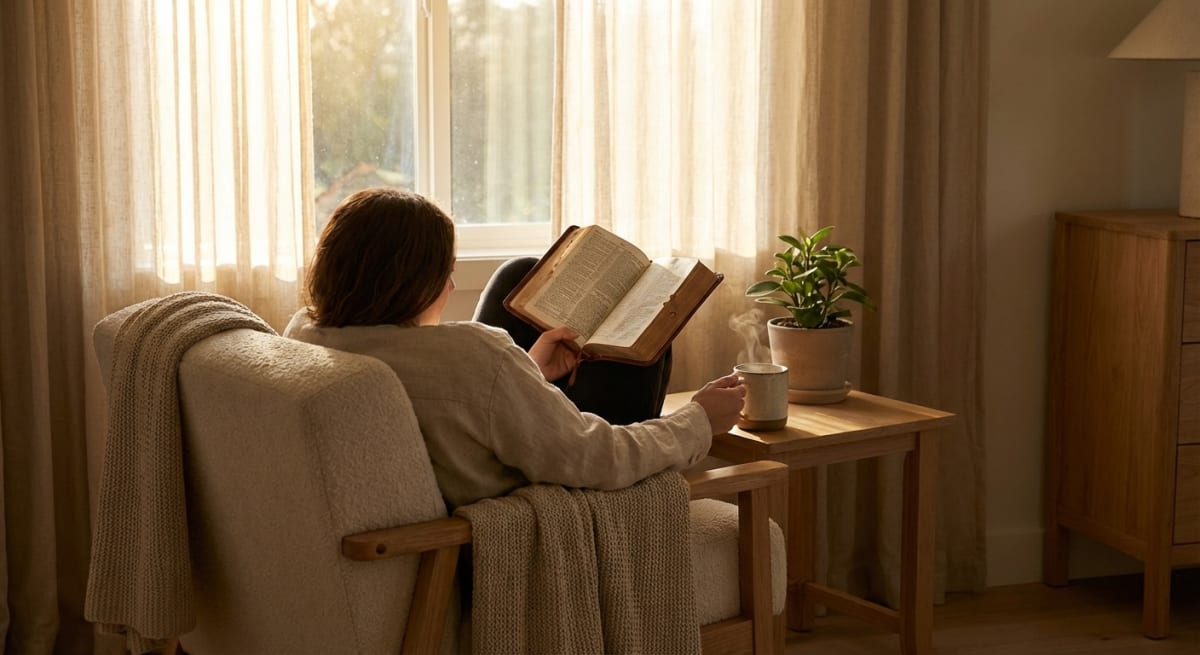
Morning readers love starting their day rooted in Scripture. The house is quiet, your mind is fresh, and you haven't been pulled in ten ways yet. Many find that morning devotional time sets a calm tone for the rest of the day.
Lunch break readers carve out a midday oasis. It's a way to reset, step back from work stress, and remember what matters most.
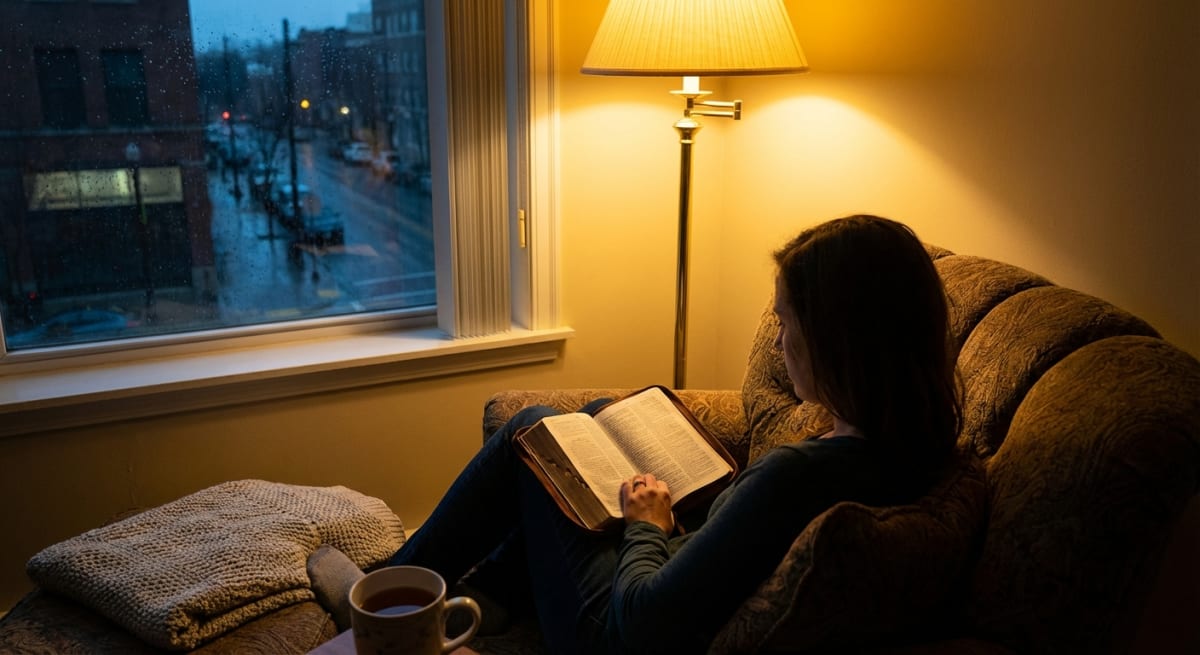
Evening readers use Scripture as a way to unwind and reflect. Reading before bed can bring peace after a long day.
The honest truth: The best time is the time you'll actually do it. Pick a slot that's realistic for your life right now—not the ideal life you wish you had.
How Long Should Daily Bible Reading Take?
This is where many people trip up. They picture hour-long study times when even 15 minutes feels like a lot.
Here's a realistic breakdown:
| Reading Style | Daily Time | What You'll Finish |
|---|---|---|
| Quick read (3-4 chapters) | 15-20 min | Whole Bible in a year |
| Steady pace (2-3 chapters) | 10-15 min | New Testament + Psalms |
| Deep study (1 chapter) | 20-30 min | One Testament in a year |
For a complete one year Bible reading plan, expect to spend about 15-20 minutes daily. That's less time than scrolling social media or watching one episode of anything.
Remember: Steady wins over intense. Fifteen minutes every day will change your life more than a rare two-hour session.
Creating Your Personal Daily Bible Reading Schedule
Let's get practical. Here's how to build a schedule that actually fits your life:
Step 1: Choose Your Plan Type
There are several approaches to organizing your daily reading:
- Chronological: Read events in the order they happened historically
- Canonical: Read straight through from Genesis to Revelation
- Blended: Mix Old Testament, New Testament, and Wisdom literature daily
- Thematic: Focus on specific topics or books
The blended style works well because it gives you variety each day. You're not stuck in Leviticus for weeks—you're also reading Psalms and Mark at the same time.
Step 2: Set Your Non-Negotiable Time
Pick a specific time and guard it. Write it down. Set a phone reminder.
Some options:
- Right after waking up, before checking your phone
- During your morning coffee or breakfast
- On your lunch break
- Right before bed
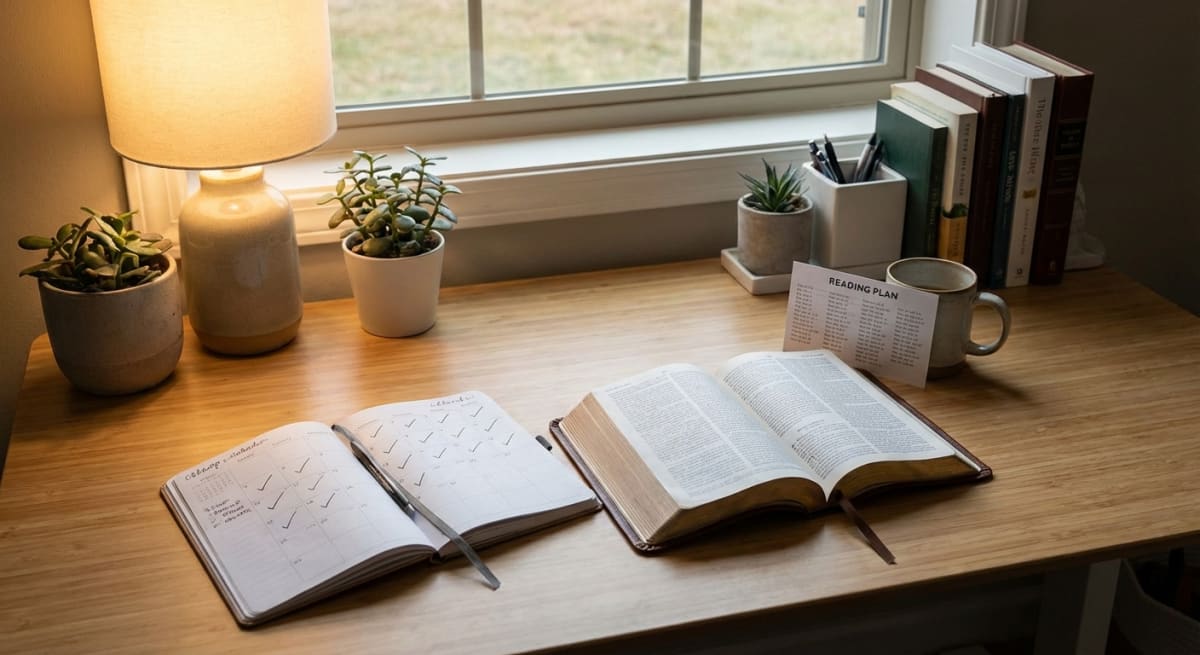
Step 3: Prepare Your Space
Create a reading spot that invites you in:
- Keep your Bible accessible (not buried under other books)
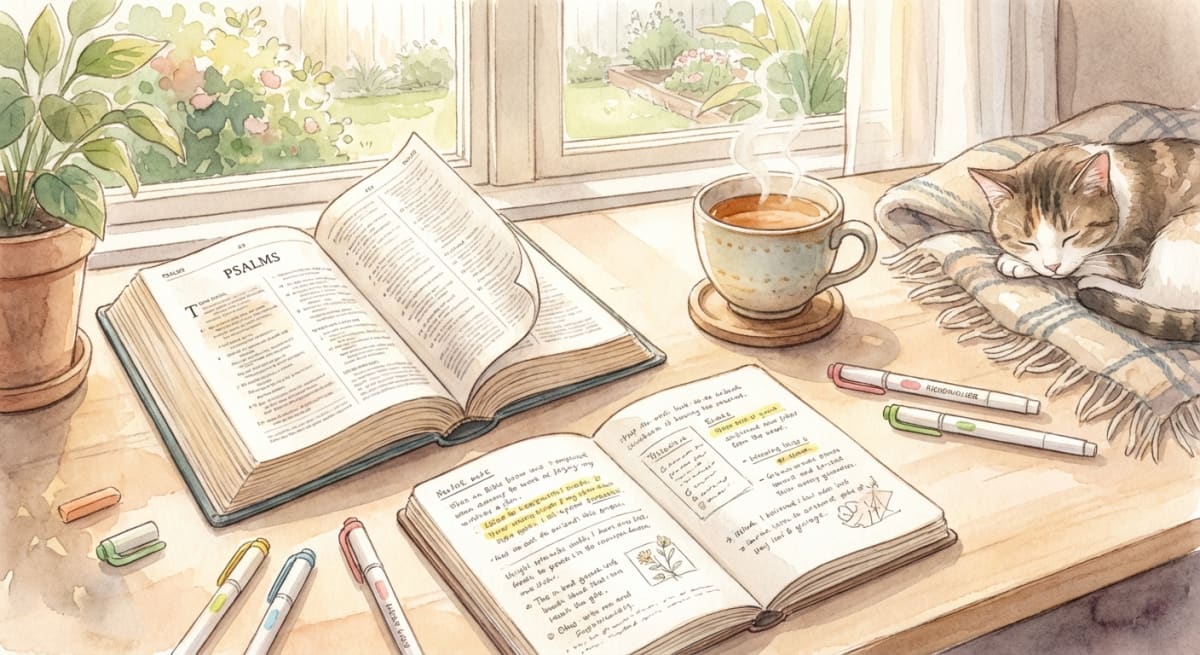
- Have a journal or notebook nearby for thoughts
- Consider a reading light if you're an early bird or night owl
- Use a Bible reading tracker to mark your progress
Step 4: Start Small, Build Up
If you're just beginning, don't commit to reading five chapters a day. Start with one. Build the habit first, then increase the volume.
Tools to Stay on Track
A Bible reading chart or tracker can make a real difference in how well you stick with it. It feels great to check off each day's reading.
Helpful tools include:
- Digital apps with built-in progress tracking (like BibleMate, which saves your progress automatically)
- Printable schedules you can post on your fridge or bathroom mirror
- Journals designed for Bible reading notes
- Reading partners or accountability groups
The key is being able to see it. When you can see your progress, you want to keep going. When you see a gap, you want to catch up.
What to Do When You Miss a Day (or a Week)
Let's be honest: you will miss days. Life happens. Kids get sick. Work gets crazy. You oversleep.
Here's what NOT to do:
- Don't give up entirely
- Don't try to read everything you missed in one sitting
- Don't feel guilty or ashamed
Instead, try this:
- Just pick up where you left off. The goal is transformation, not perfection. God isn't keeping score.
- If you're only a day or two behind, double up for a few days to catch up.
- If you're way behind, consider starting the current week fresh and letting go of what you missed.
- Remember: Reading 300 days out of 365 is so much better than reading zero because you quit after missing a few days.
The grace you give yourself matters. This isn't about earning points. It's about growing closer to God, one day at a time.

Sample Schedules for Different Lifestyles
Here are some realistic schedules based on different life situations:
The Busy Professional
- When: 6:30 AM, before getting ready for work
- Duration: 15 minutes
- Plan: Blended plan with OT, NT, and Psalm daily
- Tool: Phone app with audio option for commute backup
The Stay-at-Home Parent
- When: Nap time or early morning before kids wake
- Duration: 10-20 minutes (flexibility is key)
- Plan: Shorter passages, quality over quantity
- Tool: Physical Bible kept in a "quiet spot"
The Student
- When: Evening before bed
- Duration: 15 minutes
- Plan: New Testament focus for solid foundation
- Tool: Digital Bible on phone or tablet
The Retiree
- When: Morning with coffee
- Duration: 30-45 minutes (deeper study)
- Plan: Chronological for full narrative understanding
- Tool: Study Bible with notes and journal
The Night Shift Worker
- When: After waking (regardless of clock time)
- Duration: 15 minutes
- Plan: Flexible plan that works with any schedule
- Tool: Audio Bible for additional listening during shift
Making It Stick: The 21-Day Challenge
Want to turn your daily Bible reading schedule into a genuine habit? Commit to 21 consecutive days.
Studies show habits form through steady practice. Three weeks of daily reading—even just 10 minutes—can train your brain to expect and even want that time in Scripture.
Tips for your 21-day challenge:
- Tell someone about your commitment
- Set a daily reminder on your phone
- Reward yourself at the end (a new journal, perhaps?)
- Track each day visually
After 21 days, you'll likely find that reading feels more natural. After 90 days, it'll feel strange not to read.
Start Your Journey Today
Building a daily Bible reading schedule isn't about trying harder. It's about making space to meet with God each day—to let His words shape your mind, comfort your heart, and guide your steps.
You don't need to figure everything out today. You just need to start.
BibleMate's free reading plan makes it easy: no account required, progress saves automatically, and you can pick up wherever you left off. Whether you're starting fresh or starting over, there's never a wrong time to begin.
One day at a time. You've got this.
Frequently Asked Questions
How many chapters should I read per day to finish the Bible in a year?
To finish the whole Bible in one year, plan to read 3-4 chapters daily. This takes about 15-20 minutes. Some days are shorter (Psalms) and some longer (history books), but it evens out.
What if I don't understand what I'm reading?
That's normal! Don't let confusion stop you. Keep reading—things often make more sense as you go. You can also use a study Bible with notes, or just focus on what does make sense to you. The goal is knowing God, not passing tests.
Is it better to read the Bible in the morning or at night?
Neither is clearly better—it depends on your schedule and energy. Morning reading helps start your day rooted in Scripture. Evening reading can bring peace and calm. The best time is the one you'll stick with.
Should I use a physical Bible or a Bible app?
Both work! Physical Bibles cut screen distractions, and many people recall more from paper. Apps offer ease, audio options, and built-in tracking. Many people use both—app for on-the-go, print Bible at home.
What's the best Bible reading plan for beginners?
For beginners, try a blended plan that mixes Old Testament, New Testament, and Psalms each day. This gives you variety and keeps you from getting stuck in hard sections. Start small (even 10 minutes) to build the habit first.
How do I get back on track after falling behind?
Give yourself grace! You have two options: catch up slowly by doubling your reading for a few days, or just start fresh from today. The second choice is often better for your drive. Remember, some progress is so much better than quitting.
Related on BibleMate
Keep exploring related topics, plans, and lists.
Get the BibleMate App
Take your Bible reading anywhere. Track progress, build streaks, and stay on plan — all from your phone.
Ready to start your Bible reading journey?
Read the entire Bible in one year with daily guidance.