Scripture Meditation: How to Meditate on the Bible (2026)
TL;DR
Learn how to meditate on Scripture with practical steps. Discover methods for biblical meditation that deepen your daily Bible reading.
Scripture Meditation: How to Meditate on the Bible and Why It Matters
Have you ever finished reading a Bible passage and realized you can't remember what it said? You're not alone. Many of us rush through our daily reading without letting the words truly sink in. That's where scripture meditation comes in — a simple, life-giving practice that helps you slow down and let God's Word take root in your heart.
The good news? You don't need any special training or equipment. You just need a few quiet minutes and an open Bible. Let's explore what biblical meditation really means and how you can start today.
What Is Scripture Meditation?
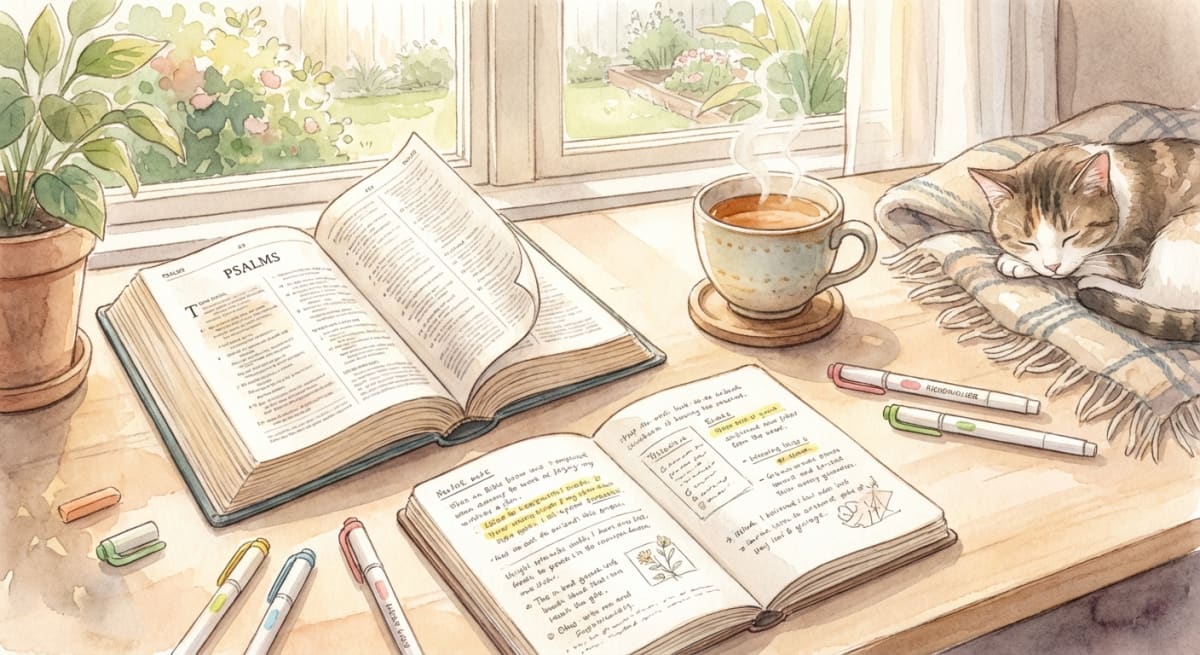
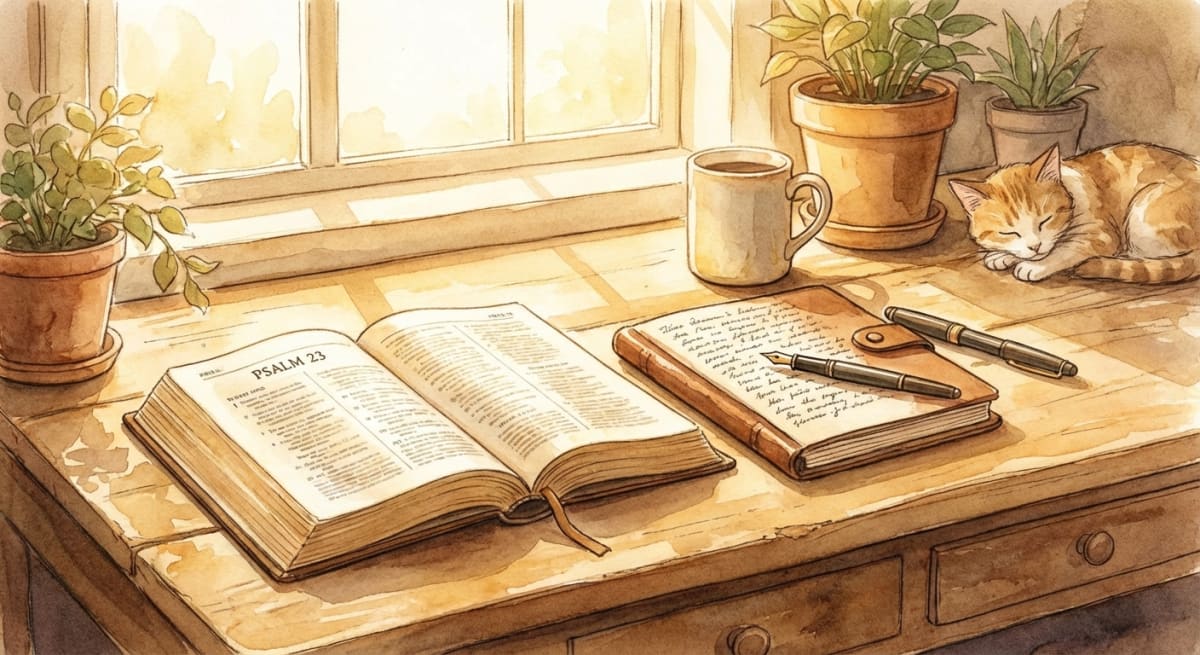
Scripture meditation is the practice of slow, focused reflection on a Bible passage. Rather than reading quickly to cover ground, you pause with a small portion of God's Word — sometimes just a single verse — and turn it over in your mind and heart.
This practice has deep biblical roots. The Psalmist wrote, "I meditate on your precepts and consider your ways" (Psalm 119:15). Joshua 1:8 encourages us to meditate on God's Word "day and night." And Psalm 1:2 describes the blessed person as one whose "delight is in the law of the Lord, and who meditates on his law day and night."
Here's something important to understand: biblical meditation is the opposite of emptying your mind. It's about filling your mind with truth. Where some forms of meditation focus on clearing your thoughts, meditating on Scripture means actively engaging with God's Word — thinking deeply, asking questions, and letting the passage speak to you.
Christians have practiced this kind of intentional reflection for centuries. It's one of the oldest and most treasured spiritual disciplines, and it's available to every believer — whether you've been reading the Bible for decades or you're just getting started with your first Bible reading plan.
Why Meditate on Scripture?
Reading the Bible is wonderful. But meditating on Scripture takes your experience to a deeper level. Here's what many people discover when they begin this practice:
- Deeper understanding — When you sit with a passage, you notice details and connections that a quick read misses. Layers of meaning begin to unfold.
- Better retention — Turning a verse over in your mind helps you remember it naturally. Many people find they memorize verses without even trying.
- Spiritual growth — Meditation creates space for the Holy Spirit to work. You may find yourself convicted, comforted, or inspired in ways you didn't expect.
- Greater peace — There's something calming about slowing down with Scripture. Philippians 4:6-7 reminds us that God's peace guards our hearts and minds.
Psalm 1 paints a beautiful picture: the person who meditates on God's Word is "like a tree planted by streams of water, which yields its fruit in season and whose leaf does not wither." That's the promise — not perfection, but a steady, flourishing life rooted in truth.
How to Meditate on Scripture — Step by Step
If you've never tried biblical meditation, here's a simple approach you can start with today. Don't worry about doing it perfectly — just give it a try.

1. Choose a Short Passage
Pick just 1 to 3 verses. This might feel small, but that's the point. Scripture meditation isn't about quantity — it's about depth. You can easily pull a verse from your daily Bible reading that stood out to you.
2. Read It Slowly, Multiple Times
Read the passage at least three or four times. Don't rush. Let each word land.
3. Emphasize Different Words Each Time
Try stressing a different word with each reading. For example, with "The Lord is my shepherd" — then "The Lord is my shepherd" — then "The Lord is my shepherd." You'll be amazed how much this reveals.
4. Ask Questions
What does this passage mean? Why did the author write it this way? How does it connect to my life right now? Approach the text with genuine curiosity.
5. Sit in Silence
After reading and reflecting, simply be still with the passage. Let it settle. You don't need to produce a brilliant insight — just be present with God's Word.
6. Write Your Reflections
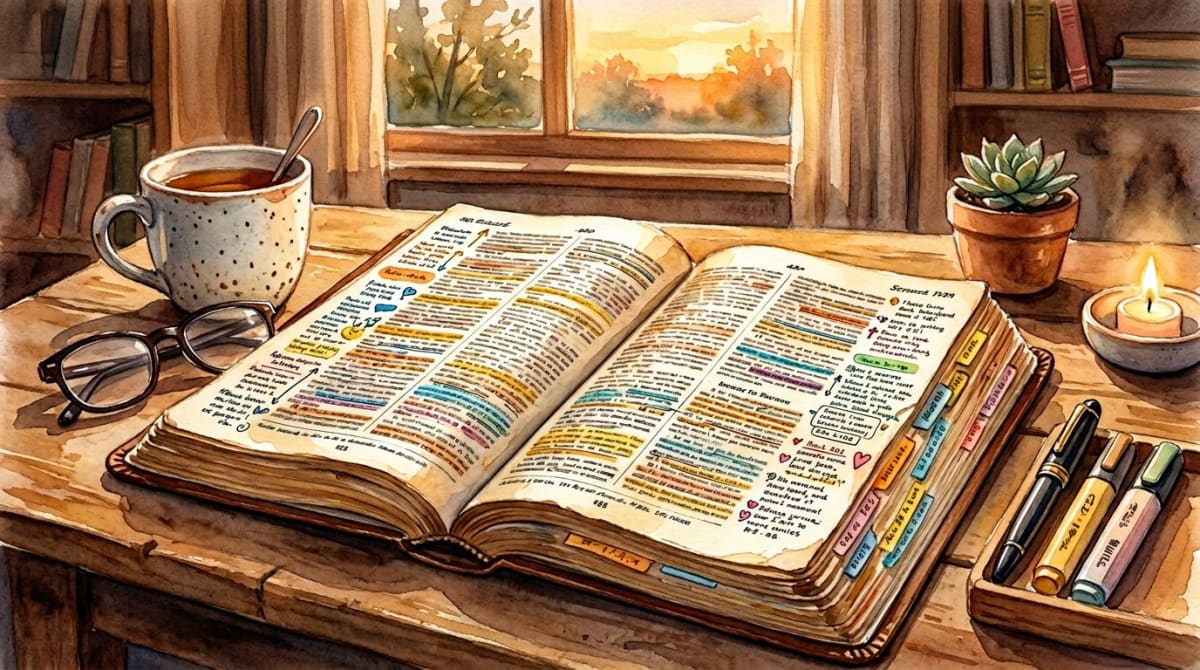
Grab a journal and write down what stood out. Even a sentence or two captures the moment and gives you something to return to later.
7. Close with Prayer
Turn your reflections into a conversation with God. Thank Him for what you've learned. Ask for help living it out. Prayer is the natural companion to meditation.
5 Scripture Meditation Methods
There's no single "right way" to meditate on the Bible. Here are five approaches you can try to find what resonates with you:
- Word-by-Word — Move through each word of the verse slowly and deliberately. Pause on each one. This method is wonderfully simple and works for any passage.
- Visualization — Picture the scene described in the passage. If you're reading about Jesus calming the storm, imagine the waves, the boat, the disciples' fear, and then His voice bringing peace.
- Question-Based — Ask who, what, why, and how. Who is speaking? What is being promised? Why does this matter? How can I respond? This method works especially well when paired with a structured Bible study plan.
- Prayer-Response — Turn each phrase into a prayer. If the verse says "The Lord is my shepherd," you might pray, "Lord, thank You for being my shepherd. Help me trust You to lead me today."
- Journaling — Write as you meditate. Stream-of-consciousness is fine. The act of writing slows your mind and helps you process what you're reading.
Try each method at least once. You'll likely find one or two that feel especially natural to you.
Best Bible Passages for Meditation
Not sure where to start? These passages are wonderful for meditating on God's Word:
- Psalm 23 — God as our shepherd and provider
- Psalm 46:10 — "Be still and know that I am God"
- Philippians 4:6-7 — Peace that surpasses understanding
- Romans 8:28 — God working all things for good
- John 15:5 — Abiding in Christ as the vine
- Psalm 119:105 — God's Word as a lamp to our feet
- Isaiah 40:31 — Renewed strength for those who wait
Shorter passages work best for meditation because they give you room to go deep. A single verse, fully explored, can be more transformative than an entire chapter read quickly.
Building a Scripture Meditation Habit
Like any spiritual discipline, scripture meditation gets richer with consistency. Here are some practical tips for making it part of your routine:
- Start with just 5 minutes. That's enough. You can always spend more time when you want to, but removing the pressure makes it sustainable.
- Combine it with your daily Bible reading. After you finish your reading for the day, go back to one verse that stood out and spend a few minutes meditating on it. If you're using BibleMate's free reading plan, you'll have fresh passages every day.
- Same time, same place. Habits form faster when they're anchored to a routine. Pick a time and spot that work for you — morning coffee, lunch break, before bed.
- Be patient with yourself. Some days your mind will wander. That's completely normal. Gently bring your attention back to the passage. There's no failing at this.
The beauty of scripture meditation is that it meets you where you are. Whether you have five minutes or fifty, whether you're a brand-new reader or a lifelong student of the Bible — this practice will deepen your walk with God.
Start Your Journey Today
You don't need to wait for the perfect moment or the perfect method. Pick a verse — maybe one from today's reading — and sit with it for a few minutes. Read it slowly. Think about it. Talk to God about it.
That's scripture meditation. It really is that simple.
If you're looking for a daily reading plan to provide fresh passages for meditation, check out BibleMate's free Bible reading plan. It gives you a balanced mix of Old Testament, New Testament, and Wisdom literature every day — and you can start anytime, no account needed.
Frequently Asked Questions
Is meditating on Scripture the same as Bible study?
Not exactly, though they complement each other beautifully. Bible study tends to focus on understanding context, history, and meaning through research and analysis. Scripture meditation is more about sitting with a passage, reflecting on it personally, and letting it shape your heart. Think of study as learning about the Word, and meditation as letting the Word dwell in you.
How long should I meditate on a verse?
There's no minimum or maximum. Even 5 minutes of focused reflection on a single verse can be deeply meaningful. As you grow more comfortable, you might naturally spend 10 to 20 minutes. The key is quality of attention, not length of time.
Can I meditate on Scripture during my reading plan?
Absolutely! In fact, combining meditation with a daily reading plan is one of the best approaches. After completing your day's reading, choose one verse that resonated and spend a few extra minutes reflecting on it.
What is the difference between lectio divina and scripture meditation?
Lectio divina is a specific structured method of scripture meditation with four traditional steps: reading (lectio), meditation (meditatio), prayer (oratio), and contemplation (contemplatio). Scripture meditation is the broader practice that includes lectio divina and many other approaches. If you enjoy structure, lectio divina is a beautiful place to start.
Is biblical meditation the same as mindfulness?
They share some similarities — both involve slowing down and being present — but the focus is different. Mindfulness generally centers on awareness of the present moment. Biblical meditation centers on God's Word specifically. The goal isn't just calm or clarity, but a deeper relationship with God through His Scripture.
What does the Bible say about meditation?
The Bible encourages meditation repeatedly. Psalm 1:2 speaks of delighting in and meditating on God's law. Joshua 1:8 instructs us to meditate on the Book of the Law day and night. Psalm 119:15 says, "I meditate on your precepts and consider your ways." Psalm 48:9 speaks of meditating on God's unfailing love. Throughout Scripture, meditation is portrayed as a path to wisdom, peace, and spiritual fruitfulness.
Related on BibleMate
Keep exploring related topics, plans, and lists.
Get the BibleMate App
Take your Bible reading anywhere. Track progress, build streaks, and stay on plan — all from your phone.
Ready to start your Bible reading journey?
Read the entire Bible in one year with daily guidance.