What Book of the Bible Should I Read First? (2026)
TL;DR
Not sure what book of the Bible to read first? Here are the best starting points based on your goals and experience.
What Book of the Bible Should I Read First? (Best Starting Points)
If you're wondering what book of the Bible should I read first, you're not alone. The Bible has 66 books, over 1,000 chapters, and more than 31,000 verses. It's completely normal to feel unsure about where to begin.
Here's the good news: you don't have to start at Genesis chapter 1. In fact, most pastors and Bible teachers recommend a different approach—one that helps you connect with the heart of Scripture right from the start.
Let's explore the best starting points based on your background and goals.
Why You Don't Have to Start at the Beginning
Many people assume they should read the Bible like any other book—from the first page to the last. But the Bible isn't organized chronologically. It's a library of different genres: history, poetry, prophecy, letters, and more.
Starting with Genesis means diving into creation, family genealogies, and ancient laws before you ever meet Jesus. For many readers, this can feel overwhelming before the journey really begins.
Think of the Bible like a library rather than a single novel. You wouldn't start at the first shelf and read every book in order—you'd pick up what interests you or what fits your current need.
Instead, consider starting with a book that welcomes you in and introduces you to the central message of the Bible: God's love for you.
The Best Book of the Bible to Read First: Gospel of John
If you want one clear recommendation, start with the Gospel of John.
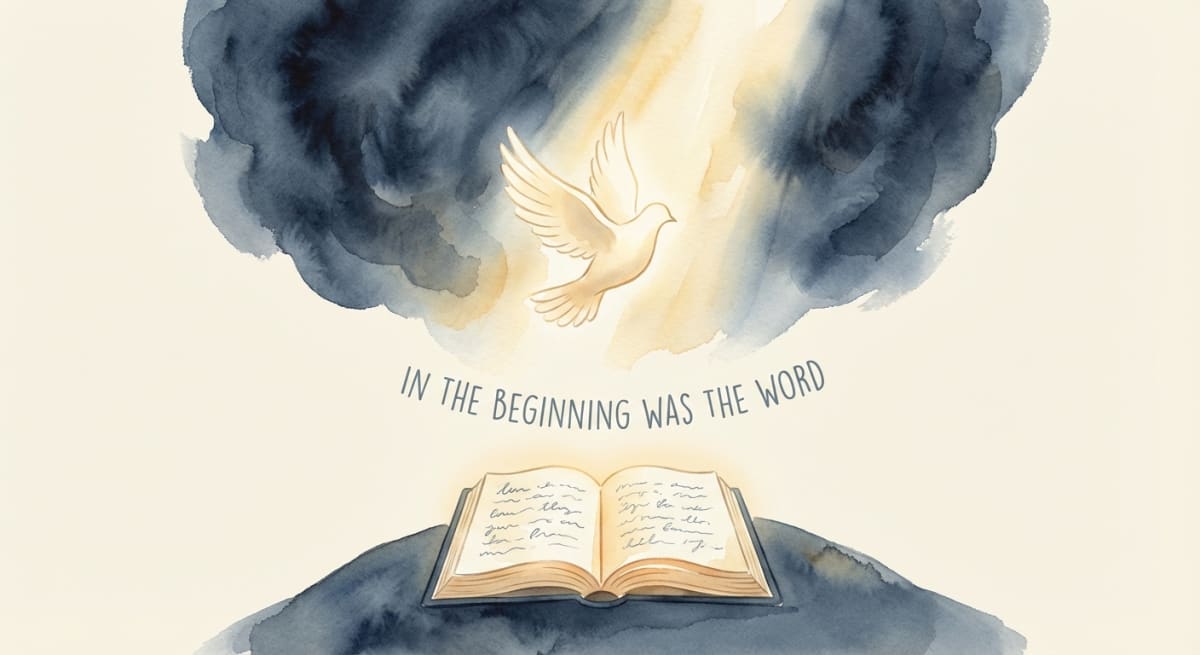
The Gospel of John was written specifically for people who are new to the story of Jesus. It opens with these beautiful words: "In the beginning was the Word, and the Word was with God, and the Word was God" (John 1:1).
Here's why John is the best book of the Bible to read first:
- Written for seekers: John explicitly states his purpose: "These are written that you may believe that Jesus is the Messiah" (John 20:31)
- Focuses on Jesus: You'll learn about His life, teachings, miracles, and conversations with ordinary people
- Accessible language: John uses simple, profound words that speak to the heart
- Manageable length: At 21 chapters, you can read it in a few weeks
John answers the biggest questions: Who is Jesus? Why does He matter? And what does that mean for my life?
Whether you're looking for where to start reading the Bible or simply need a single book recommendation, John is the most welcoming front door to Scripture.
The First Book of the Bible to Read Based on Who You Are
Everyone comes to the Bible from a different place. Here are tailored recommendations based on your situation:
If You're a New Christian
Start with Mark or John. Mark is the shortest Gospel and moves quickly through Jesus' life and ministry. John goes deeper into who Jesus is. Either one will give you a solid foundation for your new faith.
If You're Curious but Not Sure What You Believe
Start with John or Luke. Luke was written by a doctor who carefully researched everything. He presents a thorough, orderly account. If you appreciate evidence and careful storytelling, Luke will feel familiar.
If You're Returning After Time Away
Consider starting with Psalms or Philippians. Psalms meets you wherever you are emotionally—there are psalms of praise, lament, gratitude, and doubt. Philippians is a short, encouraging letter about finding joy in all circumstances. If you've been away for a while and want structure, our Bible reading plan can help you build a sustainable habit.
If You Want to Understand the Whole Story
Try Genesis and then Exodus to understand God's relationship with His people from the beginning. But pair it with one of the Gospels so you stay connected to Jesus throughout your reading.
Good Books of the Bible for Beginners: 5 Starting Points by Goal
Different books serve different purposes. Here are the best starting points based on what you're looking for:
1. For Understanding Jesus: Gospel of John
As mentioned, John gives you the clearest picture of who Jesus is and why He came. It's the first book of the Bible to read if your primary goal is meeting Jesus through Scripture. John includes seven signs (miracles) and seven "I am" statements that reveal Jesus' identity in powerful ways. You'll encounter the famous verse John 3:16, the story of the woman at the well, and the raising of Lazarus—all foundational moments in Christian faith.
2. For Daily Wisdom: Proverbs
Proverbs offers practical wisdom for everyday life—relationships, work, money, speech, and character. Each chapter can be read in just a few minutes. Many people read one chapter a day, matching the 31 chapters to the days of the month.
King Solomon, known as the wisest person who ever lived, wrote most of Proverbs. The wisdom here is timeless—advice about choosing friends carefully, working diligently, speaking kindly, and handling money wisely applies just as much today as it did 3,000 years ago.
3. For Hope and Encouragement: Philippians
Written by Paul while he was in prison, Philippians radiates joy despite difficult circumstances. At only 4 chapters, you can read it in one sitting. It's perfect if you need encouragement right now.
4. For Practical Christian Living: James
James is full of actionable advice about faith, wisdom, speech, and serving others. It's sometimes called the "Proverbs of the New Testament." If you want faith that makes a difference in daily life, James delivers.
5. For Old Testament Foundation: Genesis
If you want to understand the beginning—creation, the fall, God's promises to Abraham—Genesis is essential. Just know that it contains some challenging sections. Consider using a reading guide or learning how to read the Bible effectively alongside it.
Books to Save for Later
Some books are wonderful but better suited for after you've built some familiarity with Scripture:
- Leviticus and Numbers: These contain ancient laws and regulations important for understanding Israel's history, but they can feel dense without context
- Revelation: This prophetic book uses complex symbolism. It's meaningful, but easier to understand after reading the Gospels and Paul's letters
- Some Prophets (Ezekiel, Daniel, Zechariah): These books reference events and imagery that make more sense once you know the broader biblical story
This isn't to say these books aren't valuable—they absolutely are. But starting with more accessible books helps you build momentum and confidence first.

What Order Should You Read the Bible?
Once you've picked your first book, you might wonder what order to read the Bible after that. Here's a simple progression many find helpful:
- One Gospel (John, Mark, or Luke)
- Acts (the story of the early church)
- A short letter (Philippians, James, or 1 John)
- Psalms (for prayer and worship)
- Genesis (for the beginning of the story)
- Another Gospel (to see Jesus from a different perspective)
From there, let your curiosity guide you. There's no wrong order—the important thing is that you're reading. If you want more guidance on sequencing, check out our guide on what order to read the Bible.
Tips for Your First Bible Reading Journey
As you begin, keep these encouraging thoughts in mind:
- It's okay to start small. Even five minutes a day is meaningful. Consistency matters more than duration
- You won't understand everything. That's normal—even lifelong readers keep discovering new things
- Missing a day isn't failing. Simply pick up where you left off. Grace is at the heart of Scripture
- Questions are welcome. The Bible invites curiosity, not blind acceptance. Write down your questions as you go
- You don't need special training. The Bible was written for ordinary people like you and me
- Consider a reading partner. Sharing the journey with a friend or family member adds accountability and encouragement
- Pray before you read. A simple "God, help me understand" opens your heart to the text
Start Your Reading Journey with BibleMate
Now that you know the best book to start with, why not begin today? Our free 365-day Bible reading plan at BibleMate breaks down Scripture into manageable daily portions—mixing Old Testament, New Testament, and Wisdom literature each day.
There's no account required, no ads, and no pressure. Just you and God's Word, one day at a time.
You can do this. And you don't have to do it alone.
Frequently Asked Questions
Should I read the Bible in order from Genesis to Revelation?
You can, but it's not required. The Bible is a collection of books, not a single continuous narrative. Many people find it more engaging to start with the Gospels (especially John or Mark) before exploring the Old Testament.
Is the Gospel of John or Mark better for beginners?
Both are excellent choices. John is more reflective and focuses on who Jesus is. Mark is action-packed and moves quickly through Jesus' ministry. If you want deeper understanding, choose John. If you prefer a fast-paced story, choose Mark.
How long does it take to read each book of the Bible?
It varies widely. Mark takes about 1-2 hours to read straight through. John takes about 2 hours. Psalms, spread across 150 chapters, might take several weeks if you read a few each day. Shorter letters like Philippians can be read in 15-20 minutes.
What Bible translation should I use as a beginner?
The NIV (New International Version) and NLT (New Living Translation) are popular for readability. The ESV (English Standard Version) balances accuracy and readability. Choose one you can understand easily—you can always explore other translations later.
Can I read the Bible on my phone?
Absolutely! Apps like BibleMate, YouVersion, and Bible Gateway make Scripture accessible anywhere. Reading on your phone is just as valid as reading a physical Bible—what matters is that you're engaging with God's Word.
What if I don't understand what I'm reading?
That's completely normal. Read what you can, note your questions, and keep going. Understanding grows over time. You might also try reading a different translation or looking up context for confusing passages. Don't let difficult sections stop your entire journey.
Related on BibleMate
Keep exploring related topics, plans, and lists.
Get the BibleMate App
Take your Bible reading anywhere. Track progress, build streaks, and stay on plan — all from your phone.
Ready to start your Bible reading journey?
Read the entire Bible in one year with daily guidance.