What Is a Devotional? Meaning, Types & How to Start (2026)
TL;DR
Learn what a devotional is, how it differs from Bible study, and how to start your own daily devotional practice. Free guide for beginners.
What Is a Devotional? Everything You Need to Know
If you've ever wondered what is a devotional, you're not alone — thousands of people search for this exact question every month. Maybe you've heard friends talk about their "morning devotional" or seen devotional books at your local bookstore, and you're curious what it's all about. The good news? A devotional is one of the simplest and most rewarding ways to connect with God, and anyone can start one today.
In this guide, we'll walk through everything you need to know — from a clear definition to practical steps for starting your own daily devotional practice.

What Is a Devotional? Simple Definition
A devotional is a short spiritual reading that combines Scripture, personal reflection, and prayer. Think of it as a focused, bite-sized time with God — usually lasting anywhere from 10 to 30 minutes.
The word "devotional" comes from "devotion," meaning a deep love or dedication to something. In a Christian context, it refers to the practice of dedicating time specifically to growing closer to God through His Word.
But here's what makes a devotional different from simply reading the Bible on your own: a devotional gives you structure and guidance. Instead of opening the Bible to a random page and hoping for the best, a devotional walks you alongside a passage with reflection prompts, context, and prayer suggestions.
It's a little like having a thoughtful friend sit beside you and say, "Here — read this, and let's talk about what it means for your life today."
What Is Included in a Devotional?
Most devotionals follow a similar pattern, though the style can vary. Here's what you'll typically find:
- A Scripture passage — Usually a few verses or a short chapter that forms the foundation of the day's reading.
- A reflection or teaching — The author shares thoughts, stories, or insights that help you understand and connect with the passage.
- A prayer prompt — A suggested prayer to help you respond to what you've read.
- An application point — A practical takeaway you can carry into your day.
Here's an example of what a typical devotional entry might look like:
Today's Reading: Philippians 4:6-7
>
Reflection: Worry has a way of creeping in before we even realize it. Paul's words remind us that we don't have to carry our anxieties alone — we can bring every single one to God in prayer. Not just the big ones, but the small, nagging worries too.
>
Prayer: Lord, I bring my worries to You today. Help me trust that Your peace is bigger than my fears. Amen.
>
Apply it: The next time anxiety rises, pause and name one thing you can hand over to God right now.
Simple, right? That's the beauty of a devotional — it meets you where you are.
Devotional vs Bible Study — What Is the Difference?
This is one of the most common questions people have, and it's a great one. While devotionals and Bible studies both involve Scripture, they serve different purposes.
| Devotional | Bible Study | |
|---|---|---|
| Length | 10–20 minutes | 30–90 minutes |
| Depth | Personal reflection | In-depth analysis |
| Focus | Heart and application | Knowledge and context |
| Format | Short reading + prayer | Research, notes, discussion |
| Best for | Daily spiritual nourishment | Deep understanding of a book or topic |
Think of devotionals as your daily bread — quick, nourishing, and consistent. Bible study is more like a deep-dive meal — thorough, rich, and best done with time to savor.
The wonderful thing is that you don't have to choose one or the other. Many people do a short devotional each morning and set aside longer time for Bible study once or twice a week. If you're looking for a structured approach, a Bible study plan can help you go deeper on the days you have more time.

Types of Devotionals
One of the best things about devotionals is that there's truly something for everyone. Here are the most popular types:
Daily Devotional Books
Classic devotional books offer a reading for each day of the year. Some beloved options include:
- My Utmost for His Highest by Oswald Chambers — A timeless classic with deep, thought-provoking entries.
- Jesus Calling by Sarah Young — Written as if Jesus is speaking directly to you, with a warm and comforting tone.
- Jesus Always by Sarah Young — A follow-up focused on joy and finding peace in daily life.
Online and App-Based Devotionals
Digital devotionals have made it easier than ever to build a daily habit. YouVersion offers thousands of reading plans, and many churches publish their own devotional content online.
Topical Devotionals
If you're walking through a specific season, topical devotionals can be incredibly helpful:
- Anxiety and worry — Devotionals focused on God's peace and promises
- Gratitude — Prompts that help you notice blessings in everyday life
- Relationships — Wisdom for marriage, friendships, and family
- New believers — Gentle introductions to foundational truths
Seasonal Devotionals
Many Christians enjoy special devotionals during Advent (the weeks leading up to Christmas) or Lent (the 40 days before Easter). These offer a beautiful way to prepare your heart for meaningful celebrations.
Bible Reading Plans as Devotionals
Here's something many people don't realize: a Bible reading plan can serve as a devotional when you add reflection and prayer to your reading time. Instead of just checking off chapters, you pause to let God's Word sink in.
At BibleMate, our free 365-day reading plan breaks the Bible into daily portions that pair Old Testament, New Testament, and Wisdom literature. It's a natural framework for devotional time — and you can start your reading journey today with no account needed.
How to Do a Daily Devotional — Step by Step
Starting a devotional practice doesn't need to be complicated. Here's a simple approach that works for beginners and seasoned readers alike:
1. Choose a Consistent Time and Quiet Place
Many people find that morning devotional time works best — before the day's noise crowds in. But honestly? The best time is the time that works for you. Whether it's during lunch, before bed, or during your commute (audiobook devotionals are great for this), consistency matters more than the hour on the clock.
2. Pick a Devotional or Reading Plan
Choose something that fits where you are right now. If you're brand new, start with a beginner-friendly devotional book or a structured reading plan. If you prefer digital, an app-based plan keeps everything in one place.
3. Read the Scripture Passage Slowly
This isn't a race. Read the verses once, then read them again. Let the words settle. If a phrase stands out, sit with it for a moment.
4. Reflect on the Message
Ask yourself:
- What is God saying in this passage?
- How does this apply to my life today?
- Is there something I need to let go of or embrace?
5. Pray in Response
Your prayer doesn't need to be polished or long. Just talk to God honestly about what you read and what's on your heart.
6. Apply One Takeaway to Your Day
Choose one small thing to carry with you. Maybe it's a verse to remember, an attitude to practice, or a person to encourage. One actionable step makes the devotional real.
Tips for Beginners
If you're just starting out, here are a few encouraging reminders:
- Start with just 10 minutes. You don't need an hour to meet with God. Even a short, focused time is meaningful.
- Don't overthink it. There's no "wrong" way to do a devotional. If you read Scripture and talk to God, you're doing it right.
- Consistency beats perfection. Missing a day doesn't erase your progress. Just pick up where you left off — it's okay to start fresh anytime.
- Use a structured plan if you need guidance. Plans take the guesswork out of "what should I read today?" and keep you moving forward.
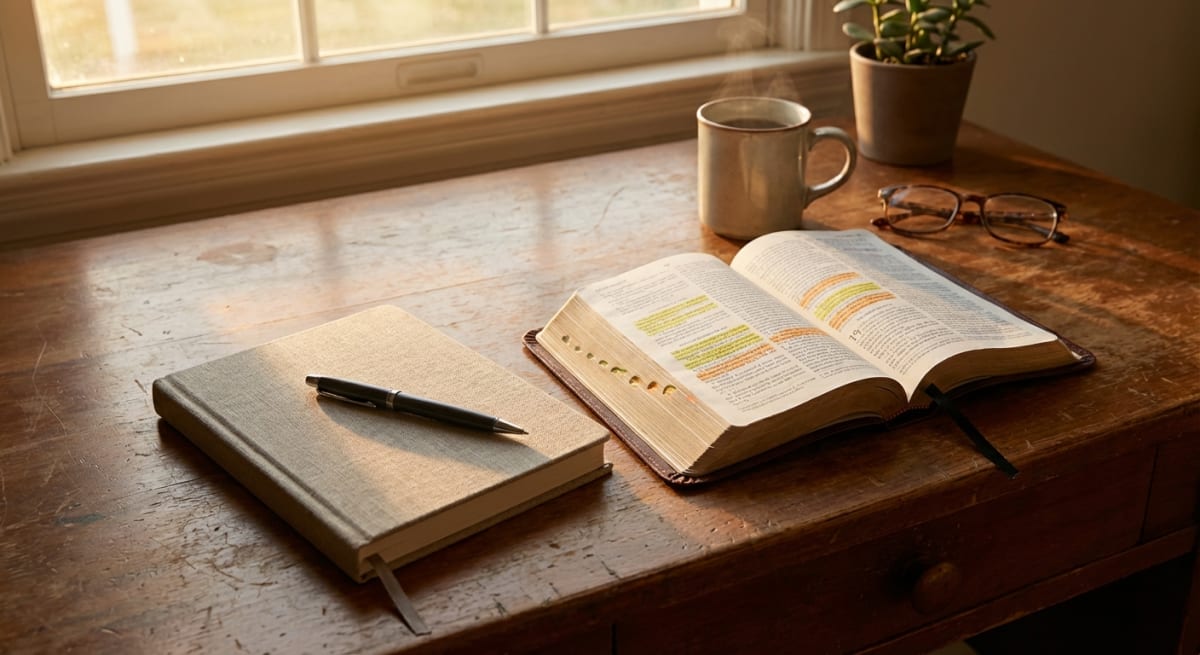
- Keep a journal nearby. Writing down your thoughts, prayers, or favorite verses helps you remember what God is teaching you.
- Find what works for you. Some people love printed devotional books. Others prefer apps. Some like silence; others play worship music. There's no single formula — experiment and enjoy the journey.
Frequently Asked Questions
How long should a devotional take?
Most devotionals take between 10 and 30 minutes. There's no required length — even 5 focused minutes with Scripture and prayer can be meaningful. As your habit grows, you may naturally want to spend more time. Start where you are and let it develop organically.
Can I use the Bible as my devotional?
Absolutely! You don't need a separate devotional book. Many people read a passage of Scripture each day, reflect on it, and pray — that's a devotional. A reading plan can help you stay on track and cover the whole Bible over time.
What is the difference between a devotional and a quiet time?
These terms are often used interchangeably. "Quiet time" is the broader practice of setting aside time to be with God, while a "devotional" usually refers to a specific guided reading. Your quiet time might include a devotional, plus additional prayer, worship, or journaling.
Do I need a devotional book, or can I do it on my own?
Either approach works beautifully. Devotional books provide helpful structure and insights, which is great for beginners. But you can also create your own devotional time by choosing a Bible passage, reflecting on it, and praying. Many people combine both — using a book some days and going freestyle on others.
What is the best devotional for beginners?
For those just starting out, look for devotionals with short daily readings and practical application. Jesus Calling by Sarah Young and YouVersion's beginner plans are popular starting points. If you'd rather read Scripture directly, a structured daily Bible reading plan gives you a clear path without needing a separate book.
How is a devotional Bible different from a regular Bible?
A devotional Bible includes the full text of Scripture plus additional devotional content — like daily readings, reflection questions, character studies, and prayer prompts woven throughout. It's an all-in-one resource that combines Bible reading with guided devotional material. A regular Bible contains only the Scripture text itself.
Starting a devotional practice is one of the most encouraging steps you can take in your faith journey. It doesn't require special training, fancy equipment, or hours of free time — just a willing heart and a few minutes with God's Word.
If you're looking for a simple way to begin, consider trying a free Bible reading plan that guides you through Scripture one day at a time. At BibleMate, you can start today — no account needed, no cost, just you and the Bible. One day at a time. 💛
Related on BibleMate
Keep exploring related topics, plans, and lists.
Morning Bible Verses
Morning Bible verses — start your day with inspiring Scripture and God's promises.
How to Read the Bible Daily: 15 Tips
Practical tips for building a daily Bible reading habit that actually sticks.
Daily Bible Reading: Complete Guide
Free reading plans, practical tips, and a simple system to read the entire Bible in a year — 15 minutes a day.
Get the BibleMate App
Take your Bible reading anywhere. Track progress, build streaks, and stay on plan — all from your phone.
Ready to start your Bible reading journey?
Read the entire Bible in one year with daily guidance.