30 Day Bible Reading Plan: Complete Guide (2026)
TL;DR
Read the entire Bible in 30 days with this free plan. Get a realistic daily schedule, practical tips, and advice for actually finishing.
30 Day Bible Reading Plan: How to Read the Entire Bible in One Month
If you've been thinking about a 30 day Bible reading plan, you're ready for a serious challenge — and that's exciting. Reading the entire Bible in one month is an intensive experience that gives you a sweeping, panoramic view of Scripture from Genesis to Revelation. It's not for everyone, and that's perfectly okay. But if you're up for it, this guide will help you succeed.

What Is a 30 Day Bible Reading Plan?
A 30 day Bible reading plan is exactly what it sounds like — a structured schedule that takes you through all 66 books of the Bible in just one month. The Bible contains 1,189 chapters total, which breaks down to roughly 40 chapters per day.
That's a lot of reading. To put it in perspective:
- A 365-day plan has you reading about 3-4 chapters daily
- A 90-day plan covers around 13 chapters per day
- A 30 day plan requires roughly 40 chapters per day
This intensive approach works best when you want to see the big picture of Scripture — how all the stories, themes, and promises connect across the entire Bible. Think of it less like studying individual verses and more like watching a sweeping epic unfold.
Is a 30 Day Bible Reading Plan Right for You?
Let's be honest about what this commitment looks like:
Time required: Plan for 2 to 3 hours of reading per day. Some days will be faster (Psalms, shorter epistles), and some will be longer (Leviticus, the prophets).
This plan works well if you:
- Have read the Bible before and want a refresher
- Can dedicate a solid block of time each day
- Enjoy reading longer stretches at once
- Want an intensive spiritual challenge
- Are comfortable reading for the big picture rather than deep study
You might prefer a longer plan if you:
- Are reading the Bible for the first time (try our free 365-day plan instead)
- Have a packed daily schedule with little free time
- Prefer to reflect deeply on shorter passages
- Find long reading sessions difficult to sustain
There's no shame in choosing a different pace. What matters is that you're reading Scripture at all. If 30 days feels overwhelming, check out our guide on different Bible reading plan options to find a pace that fits your life.
The Complete 30 Day Bible Reading Schedule
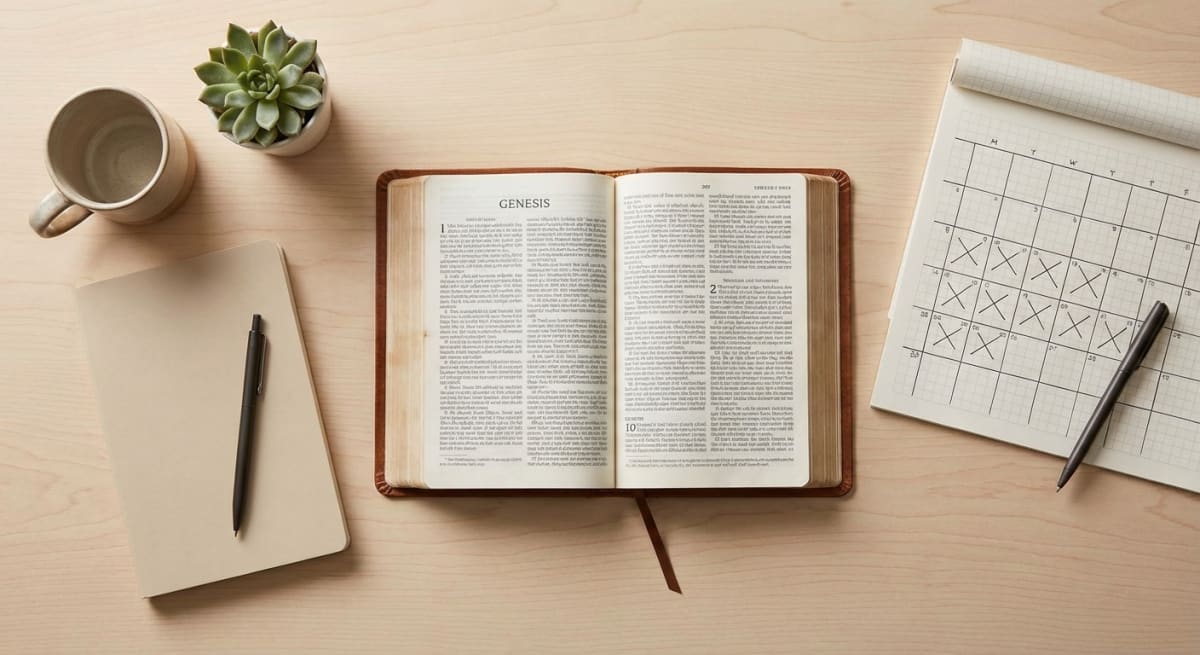
Here's a full daily breakdown that moves through the Bible from beginning to end. Each day is balanced to mix different types of writing — narrative, poetry, prophecy, and teaching — to keep things engaging.
Week 1: Creation Through the Wilderness
| Day | Reading | Chapters |
|---|---|---|
| 1 | Genesis 1–40 | 40 |
| 2 | Genesis 41–50, Exodus 1–30 | 40 |
| 3 | Exodus 31–40, Leviticus 1–27, Numbers 1–3 | 40 |
| 4 | Numbers 4–36, Deuteronomy 1–7 | 40 |
| 5 | Deuteronomy 8–34, Joshua 1–14 | 41 |
| 6 | Joshua 15–24, Judges 1–21 | 31 |
| 7 | Ruth 1–4, 1 Samuel 1–31, 2 Samuel 1–5 | 40 |
Week 2: Kings, Exile, and Return
| Day | Reading | Chapters |
|---|---|---|
| 8 | 2 Samuel 6–24, 1 Kings 1–16 | 35 |
| 9 | 1 Kings 17–22, 2 Kings 1–25 | 31 |
| 10 | 1 Chronicles 1–29, 2 Chronicles 1–7 | 36 |
| 11 | 2 Chronicles 8–36, Ezra 1–10 | 39 |
| 12 | Nehemiah 1–13, Esther 1–10, Job 1–17 | 40 |
| 13 | Job 18–42, Psalms 1–23 | 48 |
| 14 | Psalms 24–72 | 49 |
Week 3: Poetry and Prophets
| Day | Reading | Chapters |
|---|---|---|
| 15 | Psalms 73–150 | 78 |
| 16 | Proverbs 1–31, Ecclesiastes 1–12 | 43 |
| 17 | Song of Solomon 1–8, Isaiah 1–35 | 43 |
| 18 | Isaiah 36–66, Jeremiah 1–4 | 35 |
| 19 | Jeremiah 5–52 | 48 |
| 20 | Lamentations 1–5, Ezekiel 1–35 | 40 |
| 21 | Ezekiel 36–48, Daniel 1–12, Hosea 1–14 | 39 |
Week 4: Minor Prophets and the New Testament
| Day | Reading | Chapters |
|---|---|---|
| 22 | Joel–Malachi | 55 |
| 23 | Matthew 1–28, Mark 1–8 | 36 |
| 24 | Mark 9–16, Luke 1–24 | 32 |
| 25 | John 1–21, Acts 1–7 | 28 |
| 26 | Acts 8–28, Romans 1–16 | 37 |
| 27 | 1 Corinthians–Colossians | 40 |
| 28 | 1 Thessalonians–Hebrews | 36 |
| 29 | James–Jude | 22 |
| 30 | Revelation 1–22 | 22 |
A note on pacing: Some days are heavier than others. Day 15 (Psalms) has more chapters, but many Psalms are short. The prophets in Week 3 are dense. Give yourself grace — if one day spills into the next, just keep going.
Tips for Actually Finishing Your 30 Day Bible Reading Plan
1. Block Dedicated Reading Time
This isn't a "fit it in when you can" plan. You need intentional, protected time each day. Many people find success with:
- A 90-minute morning block before the day starts
- A 60-minute evening block before bed
- Two 75-minute blocks split between morning and evening
Find what works for your schedule and protect that time like an important appointment.
2. Use an Audio Bible for Parts of the Reading
This is the single best tip for a 30 day Bible challenge. Listening to an audio Bible while following along can help you cover ground much faster, especially through:
- Historical books (1 & 2 Chronicles, parts of Numbers)
- The prophets (Isaiah, Jeremiah, Ezekiel)
- Genealogies and lists
You can listen at 1.25x or 1.5x speed during these sections. Save your slow, focused reading for passages that speak to you.
3. Read for the Big Picture
During a 30 day reading plan, you're not trying to memorize verses or do deep word studies. You're watching the grand narrative unfold:
- How God creates, humanity falls, and redemption begins
- How Israel's story mirrors our own spiritual journey
- How the Old Testament points to and is fulfilled in Christ
- How the early church carried the message forward
When you hit a confusing passage, don't stop. Make a note and keep reading. You'll be surprised how much context clarifies itself when you're reading at this pace.
4. Have a Plan for Missed Days
Life happens. If you miss a day, don't panic and don't quit. Here are your options:
- Double up the next day — tough but doable if it's just one day
- Extend to 31-32 days — still an incredible achievement
- Listen to what you missed — use audio to catch up during commutes or chores
The goal is to read the entire Bible, not to achieve a perfect 30-day streak. It's always okay to adjust your plan and keep going.
5. Choose a Readable Translation
For speed reading, some translations flow more naturally than others:
- NLT (New Living Translation) — very easy to read, natural modern English
- NIV (New International Version) — balanced readability and accuracy
- ESV (English Standard Version) — slightly more formal but still readable
If you're deciding between translations, pick whichever feels most natural to read quickly. This isn't the time for KJV unless you're very comfortable with it.
What to Expect Each Week
Week 1: You'll feel energized and excited. Genesis moves fast with great stories. Exodus picks up with the dramatic escape from Egypt. Enjoy this momentum.
Week 2: This is where it gets tough. The historical books can feel repetitive. Push through — the stories of David, Solomon, and the divided kingdom are fascinating.
Week 3: The poetry of Psalms and Proverbs gives you a change of pace. But the prophets are dense and can be challenging. Use audio to help.
Week 4: The New Testament feels like a reward. The Gospels and Acts are engaging narratives. The epistles are shorter and punchy. Revelation is a dramatic finish.
Alternatives if 30 Days Is Too Intense
If you start the 30 day challenge and realize it's not sustainable, that's completely fine. Here are other options that might fit better:
- 90-Day Bible Reading Plan — about 13 chapters per day, much more manageable
- 365-Day Bible Reading Plan — just 3-4 chapters daily, our most popular option
- 5-Day Bible Reading Plan — a short sampler to build the habit
- Chronological Plan — read events in the order they happened
You can also try BibleMate's free reading plan, which guides you through the entire Bible at a comfortable daily pace with built-in progress tracking — no account needed.
Frequently Asked Questions
How many chapters of the Bible do you need to read per day to finish in 30 days?
The Bible has 1,189 chapters, so you'll need to read approximately 40 chapters per day to complete it in 30 days. Some days will be slightly more or less depending on chapter length. Shorter chapters (like many Psalms) go quickly, while longer chapters in the prophets take more time.
Can I complete a 30 day Bible reading plan with a busy schedule?
It's challenging but possible. You'll need 2-3 hours of reading time daily. The key is combining reading with audio — listen during commutes, exercise, or chores, and do focused reading during dedicated quiet time. If 2-3 hours daily isn't realistic, consider a 90-day plan instead.
Which Bible translation is best for reading the Bible in 30 days?
The NLT (New Living Translation) and NIV (New International Version) are excellent choices for faster reading. They use natural, modern English that flows well during longer reading sessions. The ESV is also a great choice if you prefer something slightly more formal.
What if I fall behind on my 30 day Bible reading plan?
Don't give up! You have several options: double up the next day, extend your timeline to 31-32 days, or use audio to catch up on missed reading. The goal is completing the Bible, not hitting an exact 30-day target. Many people who start with 30 days end up finishing in 33-35 days, and that's still an amazing accomplishment.
Is it better to read the Bible in 30 days or take longer?
Both approaches have value. A 30 day plan gives you a unique big-picture perspective — you see how everything connects because you read it all in quick succession. A longer plan like reading the Bible in a year allows more time for reflection and deeper understanding. Many experienced readers alternate between intensive and relaxed reading plans. Choose what fits your season of life.
How long does it take to read the Bible cover to cover?
At average reading speed, the Bible takes about 70-80 hours to read cover to cover. Spread over 30 days, that's roughly 2.5 hours per day. Using audio at normal speed takes about 72 hours total. At 1.25x speed, you can listen through in about 58 hours — under 2 hours per day.
Related on BibleMate
Keep exploring related topics, plans, and lists.
Reading Plans
Four Gospels Reading Plan
A 30-day plan through Matthew, Mark, Luke, and John — the best place to start if you want to know Jesus.
Chronological Bible Reading Plan
Read the Bible in the order events actually happened — perfect for understanding the full narrative arc.
New Testament Reading Plan
Read Matthew through Revelation in 90 days — focused on Jesus, the early church, and the letters of Paul.
Read the Bible in 90 Days
An intensive 90-day plan to read the entire Bible — perfect for focused seasons of immersion.
Get the BibleMate App
Take your Bible reading anywhere. Track progress, build streaks, and stay on plan — all from your phone.
Ready to start your Bible reading journey?
Read the entire Bible in one year with daily guidance.