New Testament Reading Plan 2026: 90-Day & Yearly Schedules
TL;DR
Free New Testament reading plans for any pace. Choose 90-day, 6-month, or year-long schedules with printable checklists and daily readings.
New Testament Reading Plan: Complete the NT in 90 Days (or a Year)
If you've been wanting to dive into Scripture but feel overwhelmed by the sheer size of the Bible, a new testament reading plan is a wonderful place to begin. The New Testament is shorter, deeply encouraging, and packed with the life-changing story of Jesus and the early church. Whether you have three months or a full year, there's a pace that fits your life — and you can start today.

Why Start With the New Testament?
The New Testament is only 260 chapters — compared to 1,189 in the entire Bible. That's less than a quarter of the whole book! For many people, it feels more approachable because:
- It's relatable. The Gospels tell the story of Jesus in everyday language.
- It's encouraging. Letters like Philippians and 1 John are full of hope and comfort.
- It's manageable. You can read the whole thing in as little as 90 days at just three chapters a day.
If you're not sure where to start reading the Bible, the New Testament is a fantastic first step. You'll meet Jesus, walk with the early disciples, and discover truths that have transformed lives for two thousand years.
A Quick New Testament Overview
Before jumping into your reading schedule, it helps to know what you'll find in these 27 books:
The Gospels (Matthew, Mark, Luke, John)
Four accounts of Jesus' life, teaching, death, and resurrection. Each writer brings a unique perspective — Matthew for Jewish readers, Mark for fast-paced action, Luke for careful detail, and John for deep spiritual reflection.
Acts: The Early Church
The sequel to Luke's Gospel. Watch the Holy Spirit empower ordinary people to spread the good news across the Roman Empire.
Paul's Letters (Romans – Philemon)
Thirteen letters from the apostle Paul to churches and individuals. These cover everything from theology to practical daily living. Romans and Ephesians are especially beloved.
General Epistles (Hebrews – Jude)
Letters from other early leaders — James on faith in action, Peter on endurance, John on love, and more.
Revelation
A vision of hope and ultimate restoration. It can feel mysterious, but at its heart it's a promise: God wins, and He's making all things new.
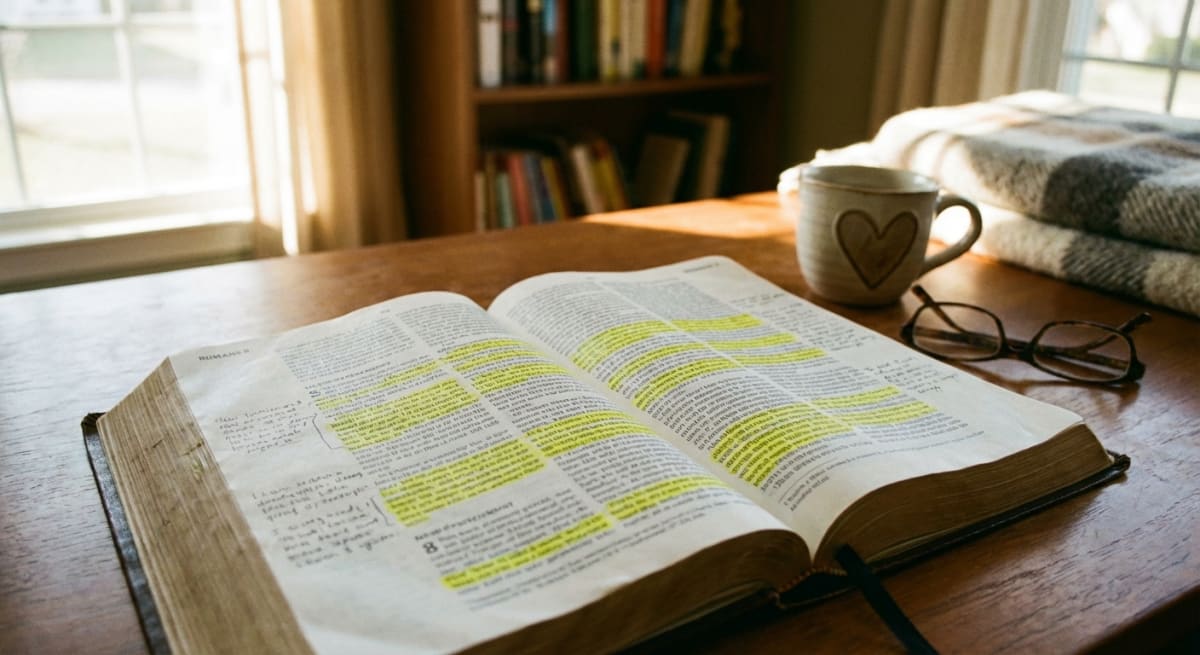
Three New Testament Reading Plan Options
The beauty of reading Scripture is that there's no single "right" speed. Choose the plan that fits your season of life — and remember, you can always adjust along the way.
90-Day Plan: Read the New Testament in 3 Months
Pace: About 3 chapters per day
This focused new testament reading schedule works well if you want momentum and immersion. Reading three chapters takes roughly 15–20 minutes.
Sample Week:
| Day | Reading | Chapters |
|---|---|---|
| Monday | Matthew 1–3 | 3 |
| Tuesday | Matthew 4–6 | 3 |
| Wednesday | Matthew 7–9 | 3 |
| Thursday | Matthew 10–12 | 3 |
| Friday | Matthew 13–15 | 3 |
| Saturday | Matthew 16–18 | 3 |
| Sunday | Rest or catch up | — |
With this pace, you'll finish Matthew in about nine days and move through the entire NT in roughly 90 days. It's a great option if you enjoy a Bible reading challenge with a clear finish line.
6-Month Plan: Steady and Reflective
Pace: About 1–2 chapters per day (weekdays only)
If you'd like more time to sit with what you read, the six-month plan is a lovely middle ground. Reading just one to two chapters per day gives you space to journal, pray, or simply think about what you've encountered.
- Monday–Friday: 1–2 chapters
- Weekends: Rest, review, or re-read a favorite passage
This pace feels sustainable and unhurried — perfect for people who want to read the Bible daily without feeling rushed.
Year-Long Plan: Gentle and Flexible
Pace: About 5 chapters per week
This is the most relaxed option, and there's absolutely nothing wrong with taking your time. Five chapters per week means you only need to read one chapter on most days, with plenty of built-in catch-up room.
Many people pair this with a full Bible reading plan that covers the Old Testament alongside the New Testament. BibleMate's free reading plan at bibleinyear.com is designed with this balanced approach — a little Old Testament, a little New Testament, and a psalm or proverb each day.
Choosing a Reading Order
You don't have to read the New Testament front to back. Here are three popular approaches:
Canonical Order (Matthew → Revelation)
The most straightforward approach. Start at the beginning and read straight through. This is what most plans follow, and it works beautifully.
Chronological Order
Read the books in the order they were likely written. You'd start with Paul's early letters (1 Thessalonians, Galatians), move to the Gospels, and end with John's writings. This is fascinating if you enjoy history and context. If you like this idea, our chronological Bible reading schedule covers the full Bible in this style.
Gospels-First Order
Start with all four Gospels, then Acts, then the letters, then Revelation. This gives you the full story of Jesus before diving into the theology that flows from it. Many pastors recommend this approach for brand-new readers.
Our suggestion? If this is your first time, go with canonical or Gospels-first. Keep it simple and enjoy the journey.
Tips for Completing Your New Testament Reading Plan
Starting is exciting. Finishing is where the real growth happens. Here are some practical ways to stay on track:
1. Pick a Consistent Time
Whether it's first thing in the morning, during lunch, or before bed — a regular time slot makes reading feel like a natural part of your day rather than one more thing on your to-do list.
2. Find a Reading Partner
Everything's better with a friend. Ask someone to join you, check in weekly, and share what you're learning. Accountability doesn't have to feel heavy — it can simply be a text message saying, "I loved what I read today."
3. Give Yourself Grace
Missed a day? Missed a week? That's completely okay. This isn't a test — it's a journey. Pick up right where you left off. As we like to say: start fresh anytime.
4. Track Your Progress
There's something deeply satisfying about checking off each day's reading. Use a journal, a printable checklist, or a free tool like BibleMate that tracks your progress automatically — no account required.
5. Don't Rush Understanding
Some passages will puzzle you. That's normal and even good! Jot down your questions and keep reading. Understanding grows over time, and you'll be amazed at how things connect as you read more.

How BibleMate Can Help
If you want a structured daily reading plan with built-in progress tracking, BibleMate makes it effortless. It's completely free — no account, no ads, no premium tier. Just open the site, start reading, and your progress saves automatically in your browser.
While BibleMate covers the entire Bible in a year (Old and New Testament together), it's a wonderful companion for anyone who wants daily structure and a visual calendar to see how far they've come.
Frequently Asked Questions
How long does it take to read the New Testament?
At an average reading speed, the entire New Testament takes about 18–20 hours of reading time. Spread across 90 days, that's roughly 12–15 minutes per day. Across a year, it's just a few minutes each day.
Should I read the New Testament before the Old Testament?
There's no rule that says you must read the Bible in order. Many people find starting with the New Testament more accessible because it introduces Jesus' story directly. Once you've read the NT, the Old Testament becomes richer because you'll see how it all connects. Our guide on how to read the Bible explores different starting points.
What's the best order to read the four Gospels?
A popular approach is to start with Mark (the shortest and most action-packed), then Luke (the most detailed), then Matthew (connects Old Testament prophecy), and finally John (the most theological). But honestly, any order works — each Gospel stands beautifully on its own.
What if I miss a day or fall behind?
Take a deep breath — it's completely fine. You can double up the next day, use a weekend to catch up, or simply continue where you left off without trying to "make up" anything. The goal is to encounter God's Word, not to perform perfectly.
Can I listen to the New Testament instead of reading it?
Absolutely! Audio Bibles are a wonderful way to engage with Scripture, especially during commutes or walks. Many people alternate between reading and listening. Check out our roundup of free audio Bible resources to find one that works for you.
What translation should I use for my reading plan?
Choose whatever translation feels clear and natural to you. The NLT and NIV are popular for readability, while the ESV balances accuracy and clarity. The KJV is beloved for its poetic language. You can compare options in our Bible translation chart or read our ESV vs NIV comparison.
Start Your New Testament Journey Today
You don't need the perfect plan, the perfect morning routine, or the perfect understanding. You just need to begin. Whether you choose 90 days, six months, or a full year, every chapter you read is a step forward — and every step matters.
Pick a plan above, grab your Bible (or open BibleMate), and start with chapter one of Matthew. You might be surprised at how quickly those pages start turning — and how much they start changing you from the inside out.
You can do this. One day at a time. 💛
Related on BibleMate
Keep exploring related topics, plans, and lists.
Reading Plans
New Testament Reading Plan
Read Matthew through Revelation in 90 days — focused on Jesus, the early church, and the letters of Paul.
Read the Bible in 90 Days
An intensive 90-day plan to read the entire Bible — perfect for focused seasons of immersion.
Chronological Bible Reading Plan
Read the Bible in the order events actually happened — perfect for understanding the full narrative arc.
Four Gospels Reading Plan
A 30-day plan through Matthew, Mark, Luke, and John — the best place to start if you want to know Jesus.
Get the BibleMate App
Take your Bible reading anywhere. Track progress, build streaks, and stay on plan — all from your phone.
Ready to start your Bible reading journey?
Read the entire Bible in one year with daily guidance.